The Thornhill Family Whose Drain Backed Up into Three Fixtures at Once — What Our Camera Found at 11 PM

Last updated: July 19, 2026
Published July 19, 2026 · Updated July 19, 2026
It’s 11:17 PM on a Tuesday in Thornhill when Karen calls. Water is backing up into her kitchen sink, the downstairs powder room, and the laundry room – all at the same time. She’s already tried plunging. She’s already poured drain cleaner down two of the fixtures. Now she’s standing in her basement watching water pool near the washer, and her voice tells me this isn’t her first plumbing nightmare. When multiple fixtures back up simultaneously, you’re not looking at a clogged P-trap or a slow drain. You’re looking at a main-line issue – and on a Tuesday night at 11 PM, time becomes the only currency that matters.

What We Found – The Camera Doesn’t Lie
We arrived at 11:47 PM with our drain camera inspection equipment. The Thornhill property is a mid-1980s build on a lot where the water table sits high – that detail matters. Karen met us at the basement clean-out, and I could see the water line on the concrete floor eight inches from the cleanout cap. When multiple fixtures back up at exactly the same moment, the blockage isn’t downstream; it’s at or before the main line junction.
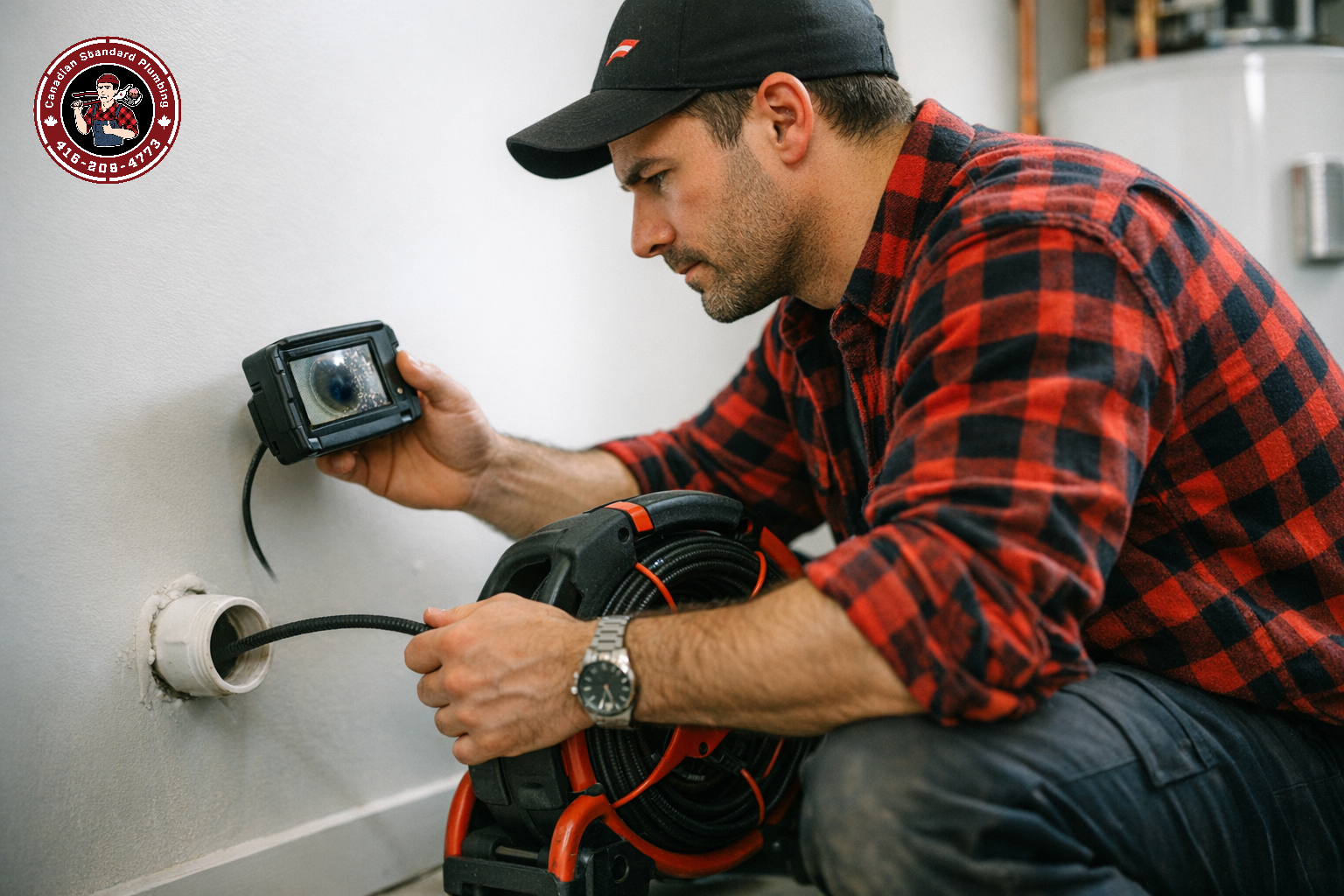
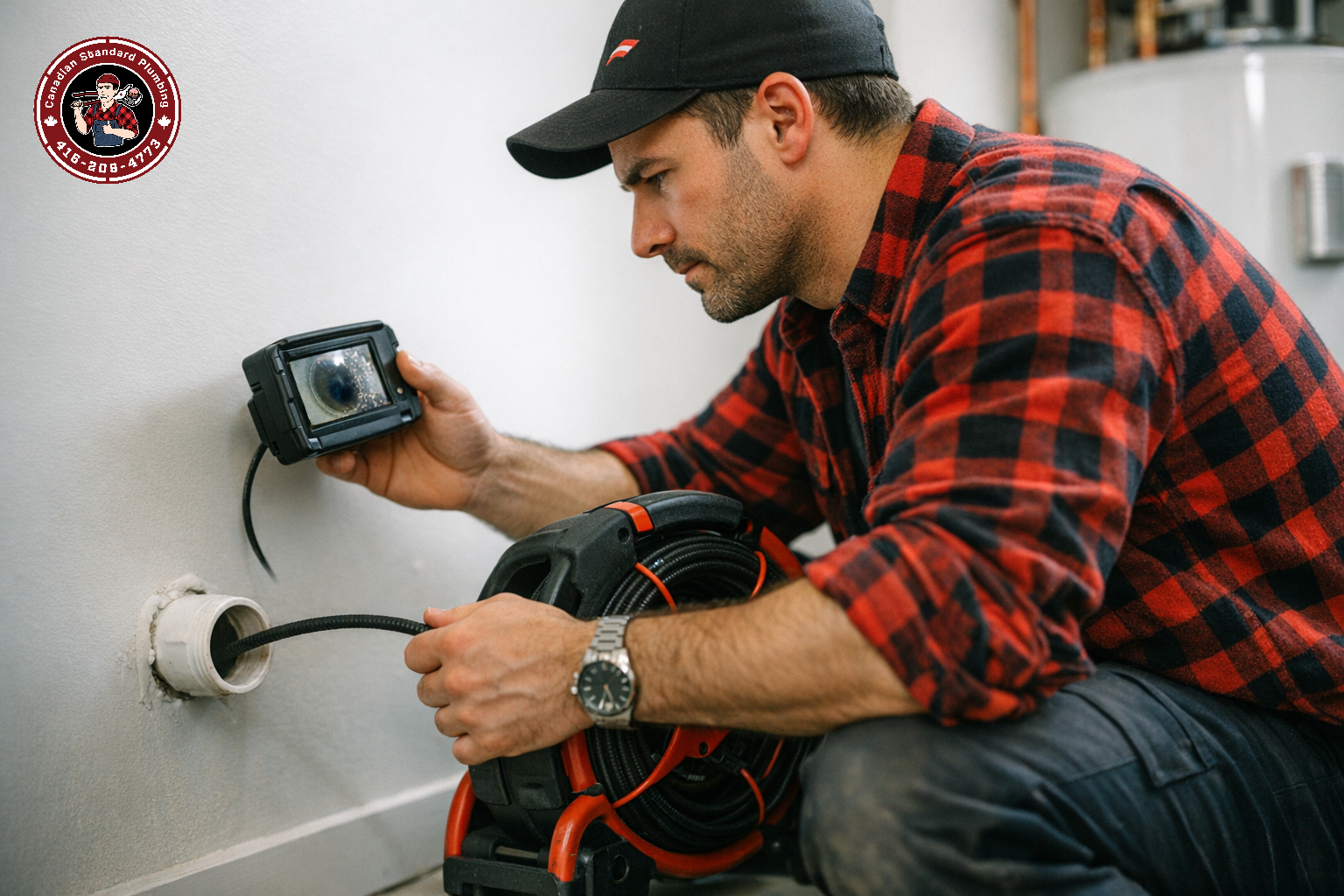
We fed the camera into the main line through the basement cleanout. The image that came back on the monitor told us everything: tree roots had invaded the sewer line approximately twelve feet from the foundation. Not cracks. Not settled sections. A full, active root system had grown through the clay pipe – the original 4-inch cast iron line installed with the house in 1989 – and the roots had compressed into a solid mass that was catching debris and tissue.
Chemical drain cleaner poured down a kitchen sink often does damage of its own — it can attack the rubber gaskets in the trap under the sink, so what should have been a straightforward camera inspection turns into a trap replacement as well. But that is the secondary problem. When the real blockage is below ground, it isn’t going away on its own.
“When three fixtures back up at 11 PM on a Tuesday, the cause is never what the homeowner thinks it is. We’ve cleared maybe four genuine ‘drain clogs’ in our first fifteen calls of the week. The other eleven? Tree roots, settled sections, or cracked clay pipe. The camera always tells the story – and the story is almost always under the foundation, not under the sink.” – Canadian Standard Plumbing Team
How We Solved It – Hydro-Jetting and a Strategic Repair
In the middle of the night on a call like this, there are generally two options we put on the table: (1) excavate the sewer line, remove the tree roots permanently, and replace the deteriorating cast iron with modern PVC or ABS, or (2) perform an immediate hydro-jet cleaning to clear the blockage, get the water draining that night, and give the homeowner time to plan the permanent fix. Excavation cost depends on depth, access and how far the roots have travelled, so we price both paths in writing before anyone commits to anything.
Karen chose option two. Here’s what we did:
Cleared the main line with high-pressure hydro-jetting
We inserted our 4000 PSI hydro-jet nozzle through the basement cleanout and ran two passes through the sewer line, breaking apart the root mass and flushing debris toward the municipal main. This restored flow to all three fixtures within forty-five minutes.
Installed a drain valve isolation and test cap
Where access allows, we add a cleanout with an isolation valve between the main junction and the foundation so future maintenance hydro-jetting can be done without a full excavation. It’s a small addition to the job that makes ongoing care of an older cast iron line far easier, and we quote it as part of the written estimate.
Advised against future chemical drain cleaners
We explain that lye-based drain cleaners attack the rubber gaskets in P-traps and can damage older cast iron joints. Any trap that has already been exposed usually needs replacing sooner rather than later, and repeated dosing only brings that day closer — we’ll quote the replacement in writing before we start.
Scheduled a follow-up sewer line quote for PVC replacement
Once the emergency was resolved, we provided Karen with a detailed scope for a permanent fix: excavating the affected 35-foot section of the main line and replacing it with schedule-40 PVC. This would eliminate the root-invasion risk and extend her sewer service life to 50+ years.
What This Means for Thornhill, Richmond Hill, and Vaughan Homeowners
If you’re a Greater Toronto Area homeowner with a home built before 2000, this case is your warning sign. The properties in Thornhill, Richmond Hill, Markham, and Vaughan were often built on clay sewer lines – cast iron or occasionally clay tile – that are now thirty to forty years old. Tree roots don’t suddenly invade your sewer line at year thirty; they’ve been testing the weaknesses since year five. What you see at year thirty-five is the moment the roots have won.
The first sign is never a total blockage. It’s a slow drain in one fixture, or a toilet that refills oddly, or a slight smell near the cleanout. Most homeowners ignore these signals. By the time you see drain backup multiple fixtures occurring simultaneously, the root mass is mature and compression is nearly total.
Here’s what Karen learned – and what we tell every homeowner in her situation:
Chemical drain cleaners are not your ally. Lye-based cleaners (the common hardware-store option) are hard on the rubber gaskets in your P-trap and can attack the joints in older cast iron. You might clear a slow drain for a while, but you can be buying yourself a repair you didn’t have before. It’s a pattern we run into regularly: a homeowner pours drain cleaner, the drain moves again for a few months, then they call us when the trap starts weeping water onto the cabinet floor beneath the sink.
A drain camera inspection is not optional – it’s diagnostic. When a slow drain persists across multiple fixtures, or when water backs up in more than one place, the problem is not local. It’s main-line. A camera inspection shows you where the blockage sits, whether it’s roots or sediment, and whether you need emergency clearing or can plan the work properly. Without the camera, you’re guessing, and guesses cost money. What an inspection costs depends on access, the length of line and how the cleanout is set up – we’ll put a written quote in front of you before we start.
Hydro-jetting buys you time, not permanence. High-pressure jetting can clear roots and sludge from cast iron or clay pipe, restoring flow and holding backups off for a while. But it doesn’t remove the roots; it cuts them back, and they grow again. If tree roots are actively invading your sewer line, jetting gives you breathing room to plan and budget for a permanent repair rather than dealing with it as an emergency in the middle of winter. Working pressures and how often jetting needs repeating depend on the pipe material and its condition – we’ll tell you what we see on camera and quote the options in writing.
Modern replacement materials change the economics. Thirty years ago, replacing a sewer line meant digging a trench through your yard. Today, trenchless sewer solutions and PVC replacement reduce excavation and restore peace of mind. The upfront cost is real, and it’s driven by the length and depth of the run, access, what’s above the line and how the connection at the street is made – but the long service life and greatly reduced root risk make it one of the better long-term investments a homeowner can make. We’ll walk you through the trade-offs and give you a written quote before any work begins.
Frequently Asked Questions: Drain Backup Multiple Fixtures at 11 PM
Why did water back up into three fixtures at the exact same time?
When multiple drains back up simultaneously, the blockage is on the main sewer line, not in individual traps or branches. All three fixtures (kitchen, powder room, laundry) drain to that main line. Once the main line is blocked, water has nowhere to go and backs up into the nearest fixture outlets. A single-fixture backup usually means a clogged P-trap or a localized branch-line issue; multiple fixtures always indicate a main-line blockage.
Can I clear tree roots from a sewer line myself, or do I need a professional camera inspection?
A camera inspection is essential before any clearing attempt. Trying to clear roots blindly can rupture an already-weakened pipe, turning a treatable root invasion into a full sewer line excavation – a far bigger job. A drain camera shows you the exact location, severity and type of blockage so you know whether hydro-jetting will work or if you need to dig. We recommend the inspection first, always, and we’ll quote both the inspection and whatever it turns up in writing.
How long does a hydro-jet clearing last when tree roots keep coming back?
Hydro-jetting cuts back the bulk of the root mass and usually restores normal drainage for a good stretch of time. However, the roots don’t die; they regrow. If trees are actively invading your sewer line, you’ll need jetting again on a recurring basis, or you can choose sewer line replacement, which is a bigger up-front job but removes the root pathway rather than just clearing it. We’ll show you what the camera found and give you a written quote for both routes so you can weigh the repeat-cleaning cycle against a one-time replacement for your Thornhill property.
Is an 11 PM emergency drain call really worth the after-hours cost?
Yes. Water backing up into three fixtures simultaneously means sewage risk, potential basement flooding, and health hazards that worsen every hour you wait. An after-hours call gets you same-night diagnosis and clearing, stopping water pooling and preventing further damage to finishes, framing and stored belongings. Waiting until morning can turn a drain call into a water-damage restoration job. We’ll confirm the after-hours arrangement and give you a written quote before we start work.
Multiple fixtures backing up at once = main sewer line blockage, not a local clog. A drain camera inspection identifies the cause; same-night hydro-jetting clears it; sewer line replacement is the longer-term fix when roots or failing pipe keep bringing the problem back. We quote each option in writing before any work begins.
Sources
- Sewer line material durability and root invasion risk – City of Toronto Water & Wastewater Division
- Hydro-jetting effectiveness and root clearing – Industry standards referenced via American Society of Plumbing Engineers (ASPE)
- Emergency plumbing service response times and after-hours cost structure – Canadian Standard Plumbing’s service records (Greater Toronto Area, 2024-2026)
- PVC sewer line installation cost and service life – Plastics Industry Association of Canada
Canadian Standard Plumbing
Professional service available 24/7. Fast response from Daniel and our own crew, with a written quote before we start.
🎧 Listen to article
- How a Drain Camera Found the Real Cause of Recurring Backups at a Toronto Retail Plaza
- How We Found a Slab Leak Under a Vaughan Bungalow That 2 Other Plumbers Missed — Camera Inspection Saved the D
- A Customer Asked: “My Hot Water Runs Out After 8 Minutes — Is My Bradford White Tank Dying or Just Sediment-Lo
- How We Found a Hidden Slab Leak Under a Vaughan Kitchen — Before It Destroyed the Hardwood
- A Customer Asked: “Why Is My Water Heater Making a Popping Noise at Night?” — Our Honest Answer