How a Drain Camera Found the Real Cause of Recurring Backups at a Toronto Retail Plaza

Last updated: July 10, 2026
A commercial drain camera inspection uncovered the real culprit behind recurring backups at a multi-tenant retail plaza in Vaughan—and it wasn’t what the property manager suspected. For six months, the plaza had cycled through two separate drain-cleaning contractors, each one clearing surface debris and moving on. The problem kept returning every four to six weeks. When we arrived with our camera equipment in March 2024, we found something neither contractor had bothered to diagnose: a structural issue 18 feet downline that chemical treatments and basic snaking could never fix.

What We Found
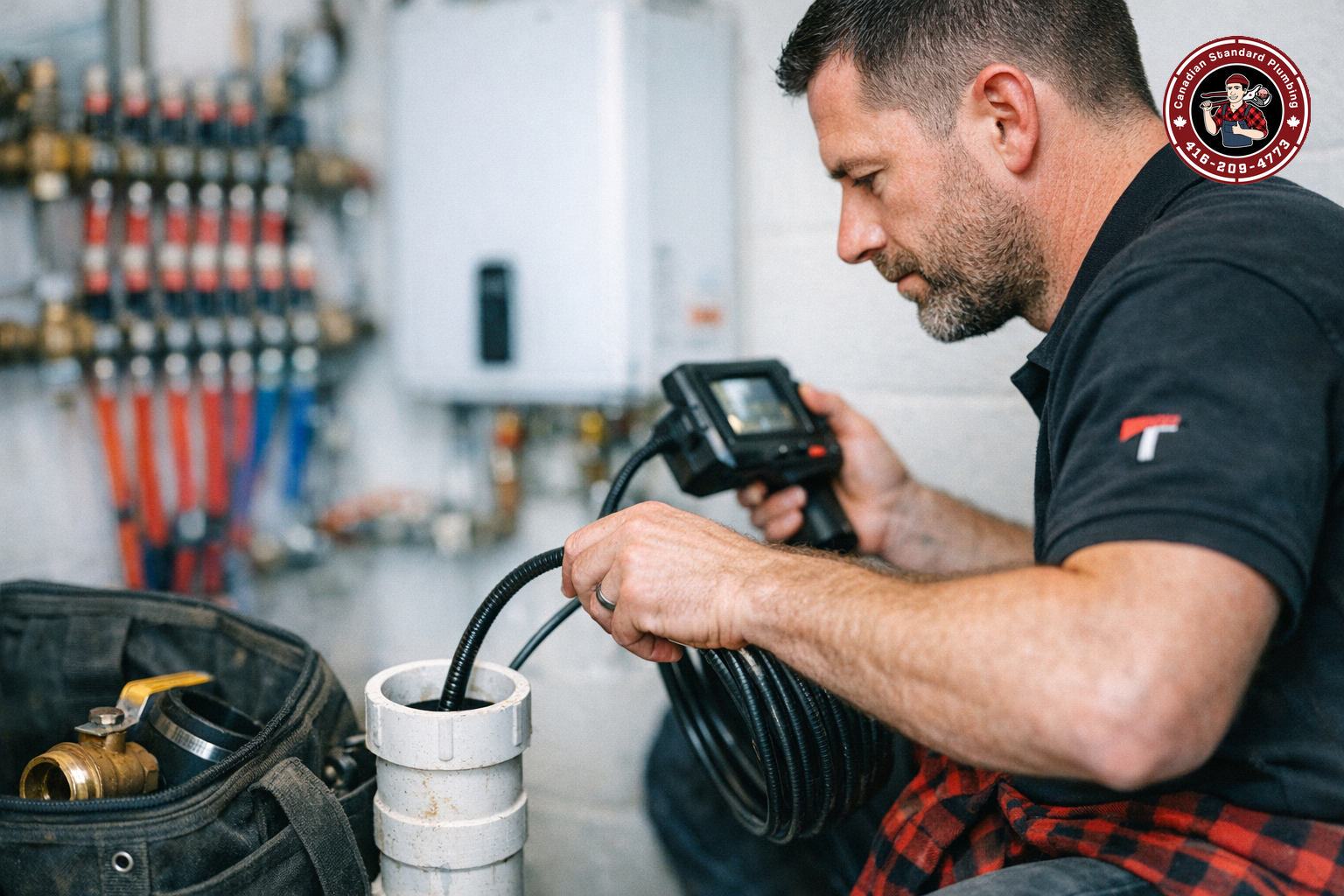
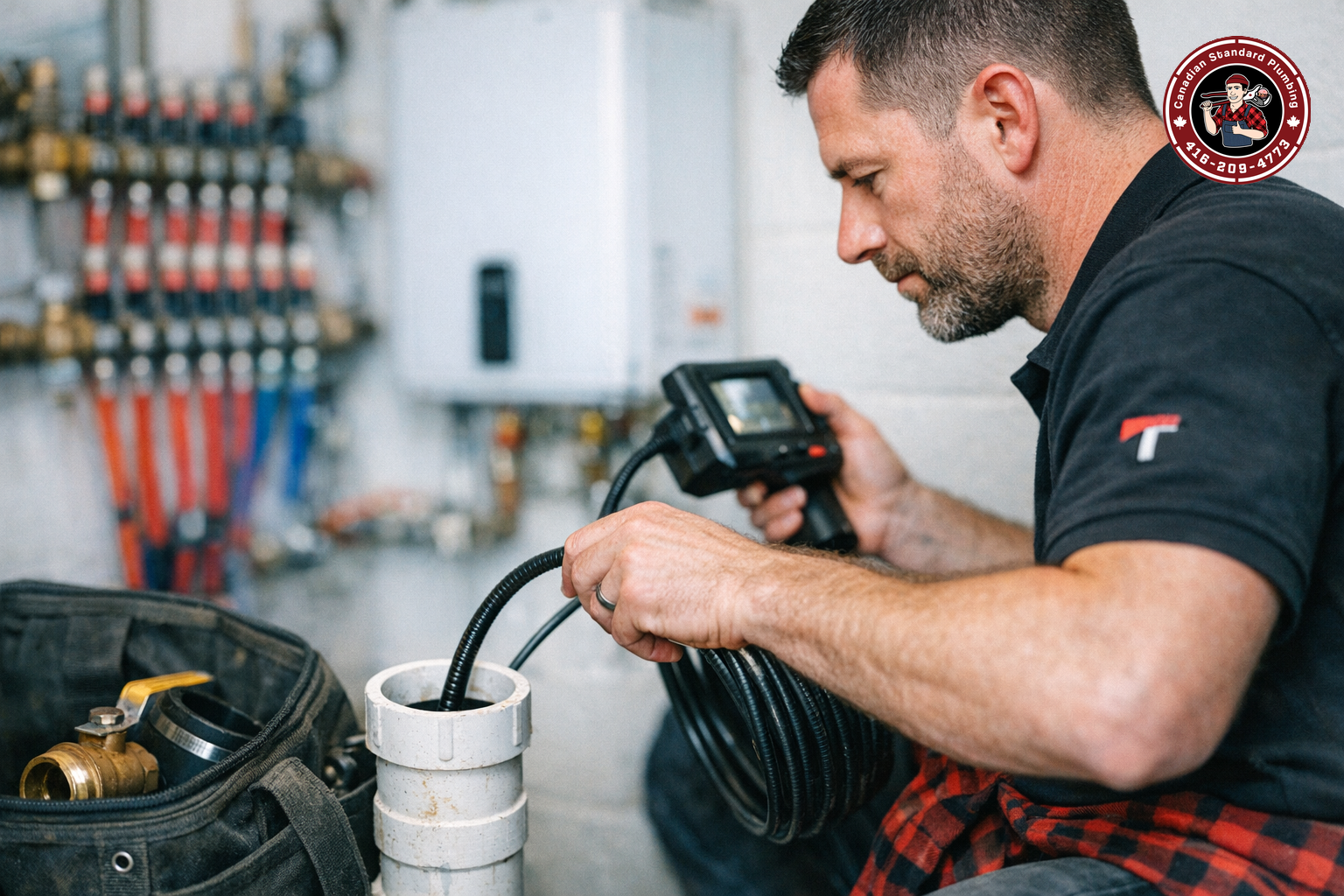
The first thing we did was run a camera down the main waste line from the cleanout nearest the street. Most property managers don’t ask for this step—they assume a plumber’s snake cleared the problem. It didn’t. What the camera showed us was a 4-inch section of the PVC main line that had sagged roughly 2 inches in the middle, creating a permanent low spot. Grease, hair, and debris from all six tenants was collecting in that depression instead of flowing downhill to the street.
That sag wasn’t caused by a recent blockage. It was structural settling—the ground beneath a 14-foot section of the line had shifted over time, and the PVC, which has almost no lateral strength on its own, had followed. The camera also revealed calcium and grease buildup because of that sag, creating a secondary trap where debris stuck. Every time the other contractors snaked it, they’d break through the blockage temporarily, but the sag would immediately begin collecting the next batch.
This is honestly the exact scenario that separates a diagnostic camera from a guessing game. Without that video feed, we’d have been the third contractor clearing a symptom, not the first one addressing the cause.
How We Solved It
When a commercial line keeps backing up, we lay out the options plainly for the property manager. Option one is short-term management: camera-clean the line on a regular schedule and keep managing the recurring debris — which means repeat cleanings every year, plus the emergency calls when it backs up between scheduled visits. Option two is a permanent fix, usually a section replacement. We put both options in writing, with the trade-offs spelled out, before anyone commits to anything.
Excavation and structural assessment
We marked the sagged section and excavated a 16-foot trench across the front of the plaza (fortunately, no utilities were in the way once we called 811). We measured the actual grade and confirmed the soil settlement pattern.
Removed failing PVC and installed code-compliant replacement
We cut out the damaged 16-foot section and installed Schedule 40 PVC (4-inch) with proper slope—1/4 inch per foot, as required by code. This time, we bedded the line on compacted sand and ensured proper backfill support so settling couldn’t happen again.
Performed post-replacement camera inspection
We ran the camera again to confirm zero obstructions, proper slope, and solid pipe-to-fitting connections. This is non-negotiable for commercial work—the property manager has written proof of what they paid for.
Grease trap management consultation
We reviewed the property’s grease-trap contract with their food tenants and recommended quarterly trap pumping (they were on a six-month cycle, which explained some of the greasy buildup). We also provided the property manager with a simple tenant memo about what goes down commercial drains and what doesn’t.
A section replacement runs from the initial camera inspection through the trench work to a final camera proof that the new run drains the way it should. Yes, it’s a bigger single bill than a drain cleaning. But the honest comparison isn’t one cleaning against one repair — it’s the repair against years of repeat cleanings, after-hours callouts when a line lets go at the worst possible moment, and the hours a tenant can’t serve customers. That’s the arithmetic we walk property managers through in the GTA and York Region, and we give you a written quote for both paths so you can compare them yourself instead of taking our word for it.
What This Means for Commercial Property Managers and Multi-Tenant Buildings
If you’re a property manager in Vaughan, Thornhill, North York, or anywhere else in the GTA managing a retail plaza, apartment building, or office complex with shared drains and you’re getting regular backup complaints—this case directly applies to you. Most drain emergencies feel random because they’re symptoms being treated instead of root causes being diagnosed. A commercial drain camera inspection is your first decision point, not your last resort.
We see three failure modes repeatedly: structural sags in the line, roots entering through old clay pipes or failed joints, and undersized lines that were never adequate for the current tenant load. Chemical drain openers make all three worse—the lye or acid clears surface debris but eats rubber gaskets in P-traps and cleanout caps, turning a straightforward camera inspection into a trap replacement on top of it. Snaking breaks through the blockage but ignores the geometry beneath. Only a camera tells you what’s actually happening inside the line, and only then can you make a decision that actually solves the problem instead of just pushing it to next month.
For residential homeowners in Richmond Hill, King City, Markham, or Etobicoke with slow drains or occasional backups, the same principle applies—scale it down. A single slow drain isn’t an emergency, but it’s a signal. A camera inspection tells you whether you’re looking at a local trap issue, like a hair clog in a P-trap that clears in one visit, or a deeper line problem that will keep getting worse. Ignoring it has a cost: slow drains eventually back up, backups become overflows, and a small scheduled repair turns into an after-hours cleanup once sewage reaches your basement. We’ll quote the inspection and any repair in writing before we start, so you can decide with the facts in front of you.
A commercial drain camera inspection is not really a cost—it’s insurance. You get definitive proof of what’s wrong and can make a fix that actually works, instead of cycling through temporary solutions. Whether you’re managing a retail plaza or a single-family home in the GTA, the camera finds the recurring backup causes that snaking and drain cleaner cannot. We quote the inspection in writing before we start.
Frequently Asked Questions
Q: How much does a commercial drain camera inspection cost, and what does it include?
What a commercial drain camera inspection costs depends mainly on line length, how many branches we need to scope, and how easy the cleanouts are to reach—so we give you a written quote before any work begins. The service includes running the camera down the main line or branch, real-time video review with the property manager or homeowner, a written report with still photos, and—if applicable—recommendations for repair or maintenance. You walk away with documentation of what’s inside your line, not a guessed diagnosis.
Q: Will drain cleaner or a plumbing snake fix the problem so I don’t need a camera inspection?
Drain cleaner and snaking are symptom relief, not diagnosis. If your recurring backups are caused by a structural sag, root intrusion, or an undersized line—as many are—clearing the blockage temporarily masks the real problem. You’ll call again in weeks. A camera tells you whether a straightforward single-drain cleaning will solve it or whether the issue is deeper in the system. Knowing that up front is usually what keeps a property from paying for the same emergency call over and over.
Q: Can a drain camera inspection replace a professional diagnosis, or do I still need a plumber to come out?
The camera is the professional diagnosis. The video shows the problem; we explain what it means and what your options are. For simple clogs, the camera might confirm that a standard drain cleaning solves it. For structural issues like a sag, roots, or pipe collapse, the camera shows you exactly where and why, so you can get accurate repair quotes. Either way, you have certainty instead of guesswork.
Q: If we find a major problem like the sagged line at the retail plaza, what kind of timeline and cost are we looking at?
It depends on line length, depth, and what’s above the trench (utilities, pavement, landscaping). A short section in an open residential yard is a very different job from a deep commercial line running under a parking lot, and the surface restoration afterward can matter as much as the digging itself. That’s why we scope the line with a camera first: it lets us put an exact scope and a written quote in front of you before you commit to excavation. Most property managers and homeowners tell us that clarity is the most valuable part of the inspection.
Why This Matters: The Difference Between Emergency Mode and Planned Maintenance
Emergency mode is an expensive way to run a building—calling for drain service every few weeks, losing tenant trust, and paying repeatedly for temporary fixes. A commercial drain camera inspection is what shifts a property out of that cycle and into planned maintenance: we see what is actually causing the backups, repair the cause once instead of clearing the symptom, and hand the property manager a plan rather than a standing worry. We always confirm the scope and provide a written quote before any work begins.
This applies to every residential homeowner and commercial building owner in the Greater Toronto Area and York Region. Whether you’re in Thornhill, Maple, Concord, Markham, Aurora, Richmond Hill, or any other neighborhood, recurring drain backups, slow drains, or sewage odors are signals to invest in a camera diagnosis. What an inspection costs depends on access, the length and layout of the line, and how much of the system needs to be viewed—and we put that in a written quote before we start. Either way, a diagnosis is a far better use of money than guessing wrong and cycling through band-aid fixes for the next year.
We offer 24/7 emergency service, but the best emergency is the one you prevent. Call us for a drain camera inspection when you first notice a pattern, not after you’ve already paid three other contractors and lost patience.
Canadian Standard Plumbing
Professional service available 24/7. Fast response from Daniel and our team, with a written quote before we start.
🎧 Listen to article
- How We Found a Slab Leak Under a Vaughan Bungalow That 2 Other Plumbers Missed — Camera Inspection Saved the D
- A Vaughan Customer Asked: “Why Is My Water Heater Popping After 8 Years?” — The Real Cause
- A Customer Asked: “My Hot Water Runs Out After 8 Minutes — Is My Bradford White Tank Dying or Just Sediment-Lo
- How We Found a Hidden Slab Leak Under a Vaughan Kitchen — Before It Destroyed the Hardwood
- Bradford White vs Rheem vs Navien: Which Water Heater Holds Up in Toronto’s Hard Water Conditions