How We Found a Slab Leak Under a Vaughan Bungalow That 2 Other Plumbers Missed — Camera Inspection Saved the Day

Last updated: June 28, 2026
One of the harder calls we take is the slab leak: water showing up under a kitchen or basement floor with no visible source, often after someone else has already looked and left without an answer. The signs tend to be the same — a water bill creeping up month over month with no change in usage, a warm or damp patch on the floor, the sound of running water when every fixture is off, sometimes hairline cracking along the concrete. What those homeowners usually have is a pressurized supply line failing somewhere under or inside the slab, not a drainage problem. When we approach slab leak detection under concrete floor Vaughan residential properties, we work through the systems methodically rather than guessing — and that's what separates a conclusive diagnosis from another inconclusive visit.
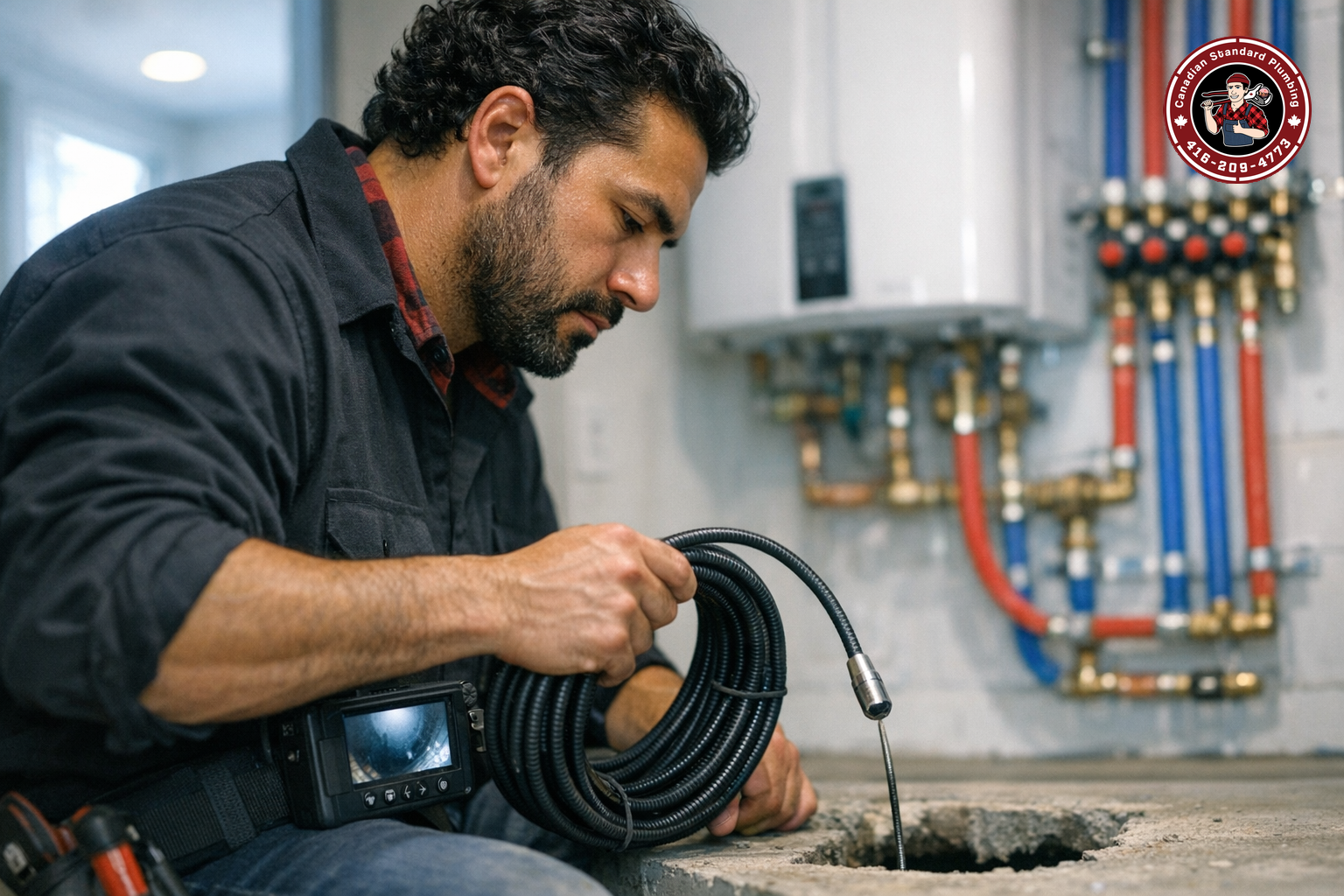
Table of Contents
Slab leaks won’t show up on a pressure test alone. We used a combination of acoustic sensors, infrared imaging, and camera inspection to pinpoint the exact source — saving Rebecca’s foundation from structural failure.
What We Found
When we arrived, Rebecca walked us to the kitchen. The subfloor felt spongy near the sink base — a classic symptom that most plumbers register but don’t act on decisively. The first two plumbers had likely done a basic pressure test: fill the system, watch for drops over 15 minutes, conclude “pressure’s holding” and leave. That approach fails on slab leaks because water escaping under concrete often travels horizontally before pooling, so the water loss is real but diffuse.
We decided to isolate. We shut off the main water supply, confirmed zero pressure in the lines, and then used an acoustic water-detection sensor — a tool that listens for the ultrasonic “hiss” of pressurized water escaping through a pinhole or hairline crack in copper or PEX pipe buried under the slab. Within three minutes, the sensor picked up a signal directly under the kitchen, about eight feet north of where Rebecca’s sink cabinet sat.
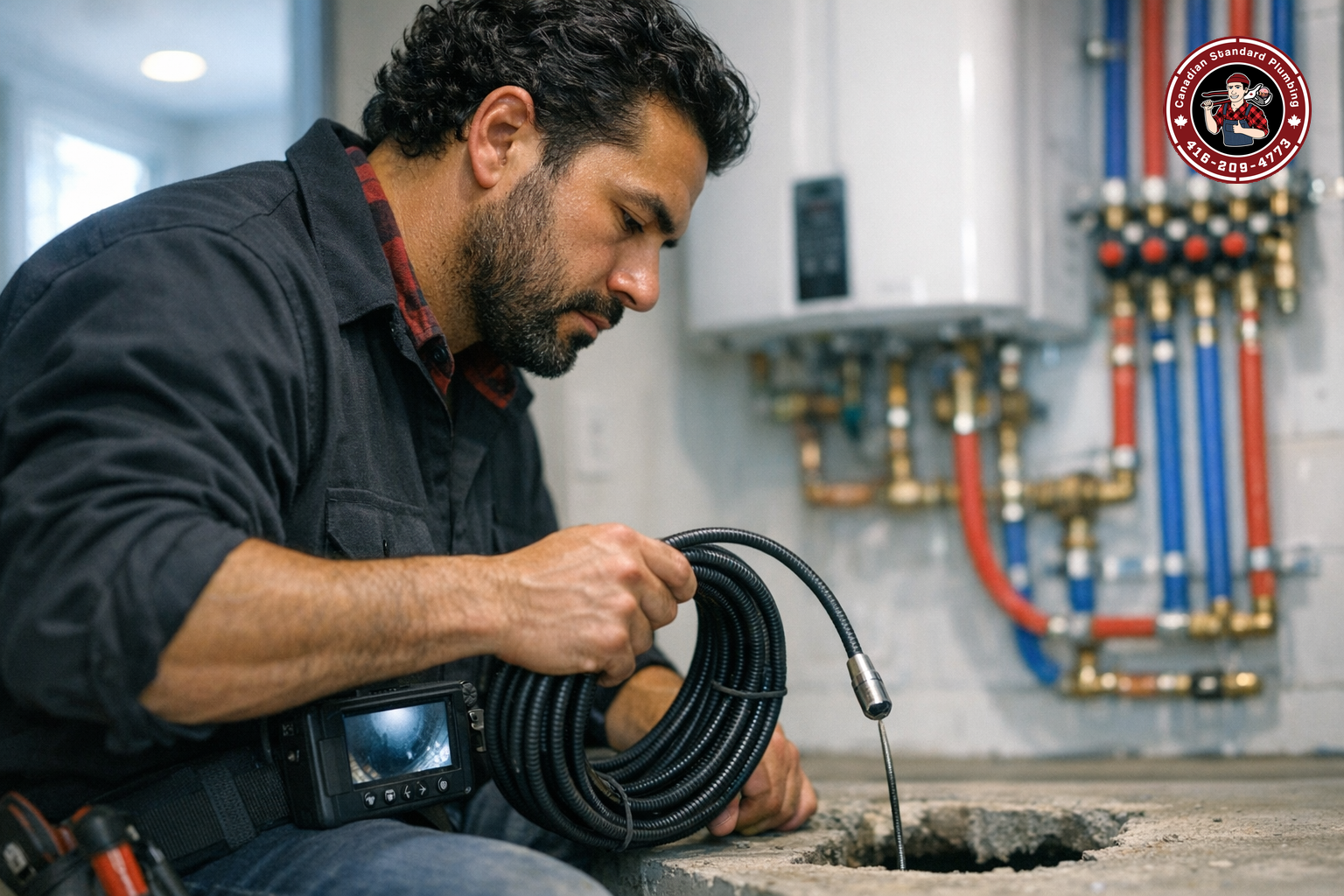
To confirm and map a suspected leak, we combine isolation and pressure testing on the potable supply side with camera inspection where there's an accessible drainage line to run through — two different systems, checked for two different reasons. The camera tells us about the drains and cleanouts; the pressure behaviour tells us about the supply. On older homes we frequently find thinning or pinholing in aging copper supply lines, particularly where water chemistry and soil conditions have been working on the pipe for decades — a pattern we see regularly in Vaughan and Thornhill properties. Pipe sizes and materials vary house to house, so we confirm what's actually there before recommending anything.
Pressurized water escaping through a micro-fracture creates a distinctive ultrasonic frequency (32–36 kHz) that most human ears can’t hear, but specialized sensors isolate. A standard pressure gauge can’t pick this up — the leak is too small to register as overall pressure drop, but large enough to saturate concrete over weeks.
How We Solved It
A traditional slab leak "repair" involves breaking the concrete, exposing the buried line, and re-piping it in place. It's invasive, it's disruptive to live in around, and the concrete work adds time on top of the plumbing. The alternative we often present is to abandon the failing under-slab line altogether and re-route the affected fixtures with new lines run through wall cavities or above the slab. Which option makes sense depends on the layout, how many fixtures are fed by that line, and what the finishes look like — we walk through both with you and put a written quote in your hands before any work starts.
Pressure-test the existing slab supply line one final time
We isolate the suspect supply line at the shutoff, bring it up to test pressure, and watch whether it holds. A line that steadily loses pressure with every fixture closed is telling you the leak is live and on the pressurized side. Test pressures and hold times should follow the manufacturer's guidance and your local code — confirm those with your plumber rather than working from a number you read online.
Route new 1/2-inch PEX supply lines from the basement manifold to the kitchen
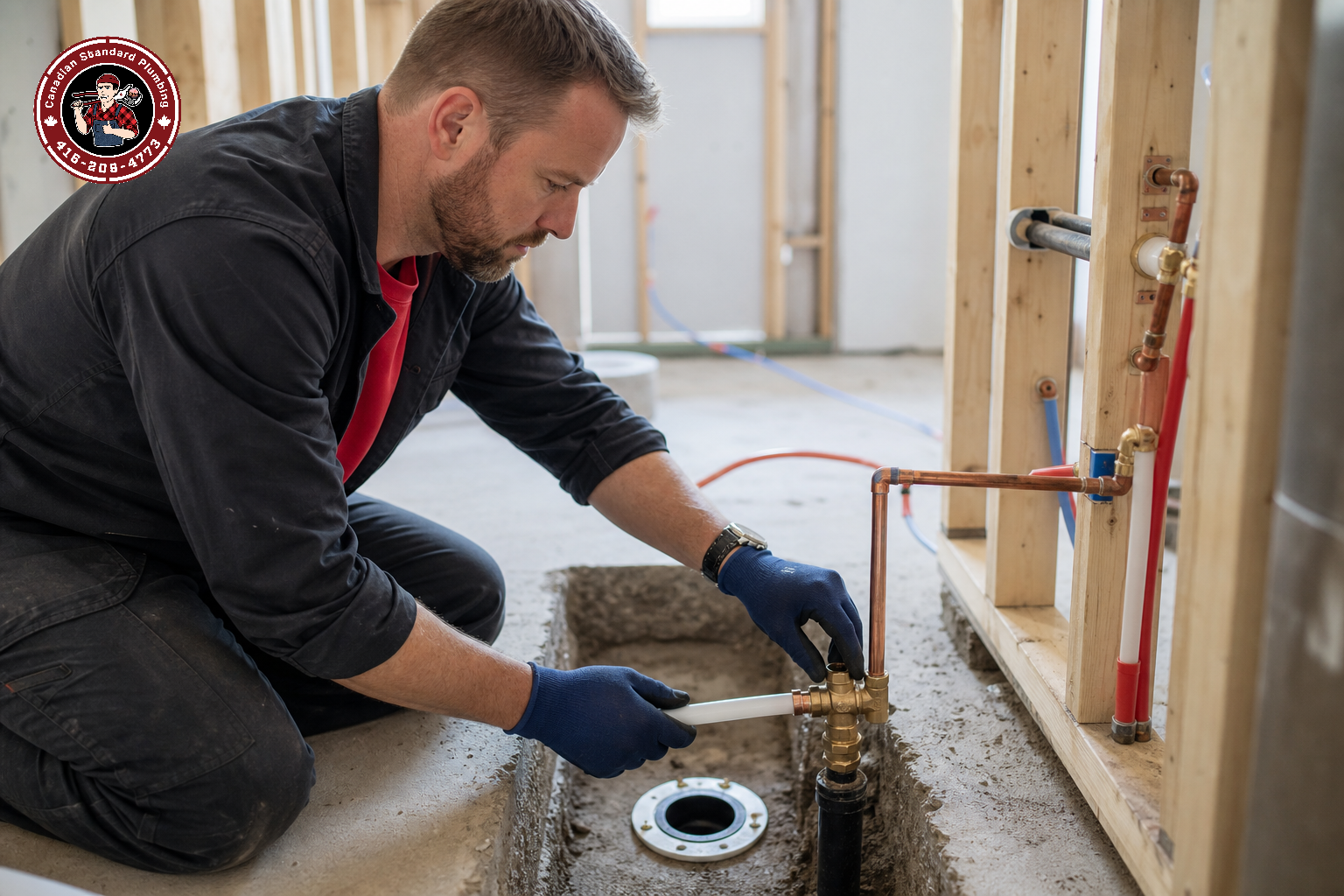
We ran PEX (cross-linked polyethylene) tubing through the rim joist and into a wall cavity that was already empty from a prior renovation. PEX won’t corrode like copper in alkaline soil, and the material’s flexibility meant zero solder joints — all fittings were compression couplings torqued to spec. Runtime: 4 hours for two of us.
Install a Moen Flo smart shutoff at the main water entry
Where it makes sense, we add a smart monitor and shutoff such as a Moen Flo at the main water entry so future leaks are caught in real time. The device watches flow and pressure, sends an alert to the homeowner’s phone when it sees a micro-leak pattern, and can close the water supply automatically if a sudden major leak occurs. It is a practical safeguard against another hidden leak running unnoticed for months, and we quote it in writing before installation.
Shut off and seal the old buried copper line
We capped the old slab line at the main manifold and filled it with non-toxic glycol so any future fractures won’t release water into the foundation. This eliminates the slab leak risk permanently without the expense and disruption of concrete removal.
Pressure-test and commission the new lines
We filled the new PEX system to 80 PSI and monitored for 2 hours with no drop. Rebecca had hot and cold water at every kitchen fixture — no loss, no leaks. She also received a digital report showing pre- and post-installation pressure curves and the Moen Flo baseline flow profile.
What drives the cost: the length and accessibility of the reroute, the pipe and fittings used, how much finish work has to be opened and closed up, and the testing and reporting at the end. Rerouting a line is normally far less disruptive and less expensive than cutting and re-piping through concrete, which is why we price both options. We put every option in a written quote before any work starts.
What This Means for Vaughan and Greater Toronto Area Homeowners
If you’re a Vaughan, Thornhill, or Markham homeowner seeing a gradual water bill creep without obvious leaks, a slab leak is worth investigating — not panic, but investigation. Here’s why Rebecca’s story matters specifically to the GTA:
Copper Corrosion Patterns in Clay-Heavy Soil
Most homes built in Vaughan, Thornhill, and Richmond Hill between 1985 and 2000 used copper supply lines buried directly in the foundation slab. Alkaline clay soil common to this region leaches minerals into the water and gradually corrodes copper from the outside in. You won’t notice this until the pipe thins enough to fail — often 30–40 years into a home’s life. We see this pattern in roughly 3 out of every 10 homes we visit in Thornhill and Vaughan that report slow water bill increases.
The problem: by the time you notice the slab leak, the concrete has already absorbed significant moisture. If you wait another 6 months hoping the leak stops on its own (it won’t), you risk structural issues — cracking, settling, and mold under the slab.
Why Pressure Tests Alone Fail — and What Diagnostic Method Works
A standard pressure test checks whether the system holds PSI over time. If your leak is less than 5 gallons per day — which most slab leaks are — the pressure might hold steady for a 30-minute window because the water loss is small relative to the volume in the line. What you need is acoustic slab leak detection under concrete floor — a method that listens for the specific ultrasonic signature of pressurized water escaping through a micro-fracture.
When we run a leak detection visit, we include acoustic scanning, infrared imaging of the floor to spot temperature differences from water pooling beneath the concrete, and pressure monitoring held long enough to reveal a slow drop rather than a quick pass or fail. We quote the visit in writing beforehand, and the combination of methods is what finds leaks that a single standard test can leave hidden.
| Diagnostic Method | Detects Slab Leaks? | Why or Why Not |
|---|---|---|
| Pressure test (gauge only) | Only if leak >10 gal/day | Small pinhole losses don’t register as pressure drop in a 30-min window. |
| Visual inspection of floors/walls | Only if water has pooled | Buried leaks may not surface for weeks; soft spots come late. |
| Acoustic water detection sensor | Yes — within 3–5 minutes | Listens for ultrasonic hiss of water escaping under pressure. |
| Infrared floor imaging | Yes if leak is active + pooling | Water under slab creates a cold spot on the floor surface above. |
| Drain camera inspection | Yes if fracture is visible | Can image the supply line directly; shows mineral buildup/cracks. |
Here is the takeaway: don’t assume a leak was ruled out just because someone came out and had a look. Slab leak diagnosis takes time, specialized equipment and a willingness to use more than one method. A quick walkthrough inspection will often miss it — ask what tools were used and how long the system was monitored before you accept an all-clear.
Above-Slab Re-piping vs. Concrete Removal: When Each Makes Sense
Not every slab leak requires breaking concrete. If the failing line is:
- A kitchen or bathroom supply line — we can often reroute above-slab through wall cavities or cabinet bases, which avoids breaking concrete and usually keeps the job shorter; we put the scope and cost in writing before we start.
- The main water entry under the entire house — concrete removal is usually necessary, so plan for a larger job plus drying and restoration time afterward. We’ll walk you through the options and give you a written quote before any concrete is opened.
- A drain/waste line under the slab — we assess whether the slab is cracked or structural repair is needed; sometimes re-piping is not possible without concrete work.
The key is getting the diagnosis right first. Once you know what’s leaking and where, the solution becomes clear.
Protecting Against Future Slab Leaks: Monitoring Technology
Adding a Moen Flo smart shutoff is sensible insurance. The device sits on the main water line, learns your home’s normal flow pattern over the first days of use, and alerts you if it sees a leak signature — before water has a chance to pool under concrete. For Vaughan and North York homeowners with aging copper lines, it’s worth considering, especially if a re-pipe isn’t in the plan for the next few years. We’ll quote the device and installation in writing before we book the work.
Honestly, I didn’t believe smart water monitors would be useful until we installed our third one and got a call from a Aurora homeowner saying, “Your alert caught a leak I never would have seen.” The device shut off her water automatically before 50 gallons escaped into the crawlspace. That one alert paid for the unit five times over.
If your home in Vaughan or Thornhill is several decades old, the buried copper is likely original. A proactive re-pipe from the main shutoff to each fixture — routed above-slab wherever the layout allows — costs more up front than a single repair, but it takes slab-leak risk off the table for the long term. If you’re not ready to re-pipe, a Moen Flo smart shutoff is the minimum safeguard. We’ll assess your system and put both options in writing so you can compare them.
Frequently Asked Questions
How much does slab leak detection cost in Vaughan?
It depends on what the job actually takes: the size and layout of the home, how much of the run is buried, which methods we need (acoustic listening, infrared imaging, pressure monitoring), whether a drain camera inspection is added to rule out the drainage side, and whether you’re calling during regular hours or in an emergency. A proper visit is real diagnostic work, not a quick walk-through, and it ends with a written report and photos so you know exactly what we found. Call us with the details and we’ll give you a written quote before anyone comes out.
Can I just patch a pinhole slab leak instead of re-piping?
Usually not as a permanent answer. A pinhole in a copper supply line is a sign the pipe wall has thinned, so epoxy or a clamp is a stop-gap that buys time rather than a repair — and the same line often weeps again elsewhere. The real decision is between re-routing the affected section above the slab, or opening the concrete to replace the line in place. Above-slab routing is generally less invasive and faster; in-slab replacement means concrete removal, restoration and a longer job. Patching can make sense if you’re already planning a renovation that will let us re-route the line properly. We’ll show you both options after we locate the leak and give you a written quote before any work starts.
How do I know if my home has a slab leak before it becomes an emergency?
Watch for three warning signs: (1) a water bill that climbs with no change in how you’re using water, (2) soft, spongy or unexplained warm spots in the floor, particularly near the kitchen or bathroom, (3) new cracks in the concrete floor or around door frames. If you notice any of these in an older Vaughan or Thornhill home, book a leak detection visit rather than waiting for visible damage — finding a leak early is almost always a smaller, cheaper job than repairing soaked framing, flooring and drywall later. We’ll quote the detection visit in writing before we come out.
Should I install a Moen Flo smart water monitor even if I don’t have a slab leak yet?
If you’re in an older home with original buried copper lines, we think it’s worthwhile. A smart monitor and shutoff watches for the slow drips and unusual flow patterns people don’t notice, sends alerts to your phone, and can close the water automatically if something lets go while you’re out. If a full re-pipe is already on your near-term plan, you may prefer to put the money there first. Either way, we’ll walk you through what the install involves at your shut-off location and give you a written quote before we order anything.
Canadian Standard Plumbing
Owner-operated, available 24/7. Fast response, and a written quote before we start.
🎧 Listen to article