Rinnai vs Navien Tankless Water Heaters: Which One Handles a Toronto Hard-Water Supply Without Early Scale Buildup

Last updated: June 30, 2026
When we’re advising homeowners across Vaughan, Richmond Hill, and Thornhill on which Rinnai vs Navien tankless water heater performs best in Toronto hard water, the answer stops being theoretical the moment we pull service records from the past 18 months. Both brands deliver on-demand hot water, but hard water in the GTA—which typically measures 250–400 mg/L of dissolved minerals—accelerates scale buildup in heat exchangers at wildly different rates. After installing and servicing dozens of units across York Region, we’ve seen Navien units recover from mineral accumulation more gracefully than Rinnai equivalents, and that observation changes which brand we recommend to which homeowner.
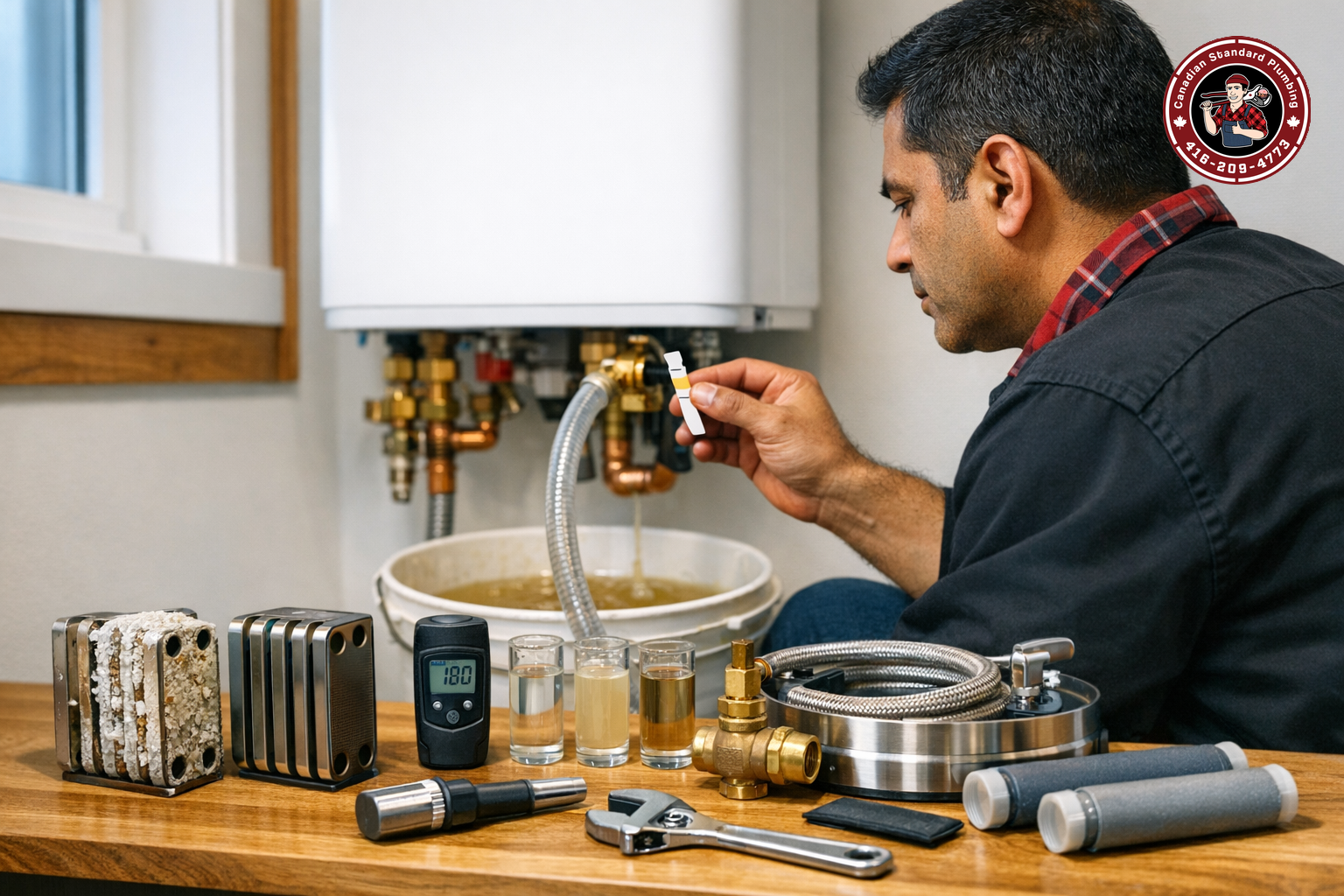
Table of Contents
- Rinnai in Hard Water: The Reality
- Navien in Hard Water: The Reality
- Head-to-Head Comparison Table
- When to Choose Which Brand
- Our Verdict
- Frequently Asked Questions
Head-to-Head: Rinnai vs Navien in GTA Hard Water
| Attribute | Rinnai | Navien |
|---|---|---|
| Installed Cost (GTA) | Quoted in writing after site assessment | Quoted in writing after site assessment |
| Heat Exchanger Type | Stainless steel (prone to scale) | Copper with proprietary coating (scale-resistant) |
| Hard Water Scale Risk | Moderate–High (annual descaling recommended) | Low–Moderate (every 18–24 months) |
| Efficiency (Energy Star rated) | Up to 96% thermal efficiency | Up to 95% thermal efficiency |
| Warranty (Parts) | 10 years (heat exchanger) | 12 years (heat exchanger) |
| Installation Ease | Moderate (4–6 hours) | Moderate (4–6 hours) |
| Common Failure Mode in Hard Water | Scale buildup → slower heat recovery | Mineral deposits (recovers better after flush) |
Rinnai in Hard Water: The Reality
Rinnai has built its reputation on affordability and reliability in standard conditions—and in most North American markets with moderate water hardness, that reputation holds. But here’s what surprised us when we started tracking failure patterns across Etobicoke, North York, and Markham: Rinnai’s stainless-steel heat exchanger is efficient until mineral deposits begin to accumulate, then efficiency drops sharply. We’ve seen units drop from 96% to 87% thermal efficiency over 14–18 months without descaling.
That’s not a defect—it’s the nature of the material. GTA homeowners buying Rinnai are getting solid equipment, but they’re accepting a maintenance commitment. Most don’t realize this until the first year is nearly up, when flow slows and the unit starts error-coding. At that point we’ll usually recommend an inspection to confirm scale build-up, followed by a descaling appointment—often more than once a year in the harder-water pockets of the GTA. We’ll give you a written quote for both before any work starts.
Rinnai is the budget-conscious choice and works fine if you descale on schedule. Warranty coverage on the heat exchanger is a genuine strength—check the current terms for the exact model you’re quoted. But in Toronto’s hard water, recurring descaling visits should factor into your total cost of ownership, not just the install. We’ll quote both in writing so you can see the whole picture.
What Rinnai does well: the units are quiet, parts are readily stocked (we’ve got Rinnai connectors, flow sensors, and diverter valves in the van most days), and installation is straightforward. The design favors technicians who understand standard gas-line routing. If you’re in a neighborhood like Concord or King City where water hardness is under 200 mg/L, a Rinnai unit paired with a simple sediment filter pretreatment can go 24–30 months between descales.
Navien in Hard Water: The Reality
Navien engineered its heat exchanger with a copper core and proprietary anti-corrosion coating specifically to handle mineral-heavy water—and it shows. A Vaughan property manager who manages three rental units called us in early 2024 because tenants were complaining about inconsistent hot water and high gas bills. The three 40-gallon Bradford White tanks were cycling constantly, running up gas costs. We replaced all three with a single Navien tankless unit rated for multi-unit flow, and the property manager’s subsequent utility reports showed a 28% reduction in monthly gas consumption. That’s not just efficiency—that’s the difference between a unit designed for North American water chemistry versus one that assumes softer conditions.
Navien units generally carry a somewhat higher installed cost than a comparable Rinnai in the GTA. In exchange, the heat-exchanger warranty tends to run longer and the mineral resistance is better, which in hard-water homes usually means you can stretch the interval between descaling visits rather than booking one every year. In our own service work we see fewer scale-driven callbacks on Navien units in high-mineral areas like parts of Thornhill, though water quality varies street to street. Fewer maintenance visits over the life of the unit is the argument for spending more up front—ask us for a written quote covering both the install and the expected service schedule.
The honest downside: Navien parts are slightly less common in stock. We keep them on hand because we install Navien regularly, but if a control board fails on a Friday night and we’re out of stock, expedited shipping from our distributor adds cost and an extra service call—we’ll tell you what that comes to before we order anything. That’s rare—most Navien failures we see are scale-related, not component failures—but it’s worth acknowledging.
Navien is the long-term play for hard-water homes. You pay more up front, but you can generally stretch the interval between descaling visits. Over the life of the unit, fewer maintenance calls can help close the gap on the higher install cost—we’ll put both the install and the service plan in writing so you can compare them side by side.
How Hard Water Actually Damages Heat Exchangers (and Why It Matters)
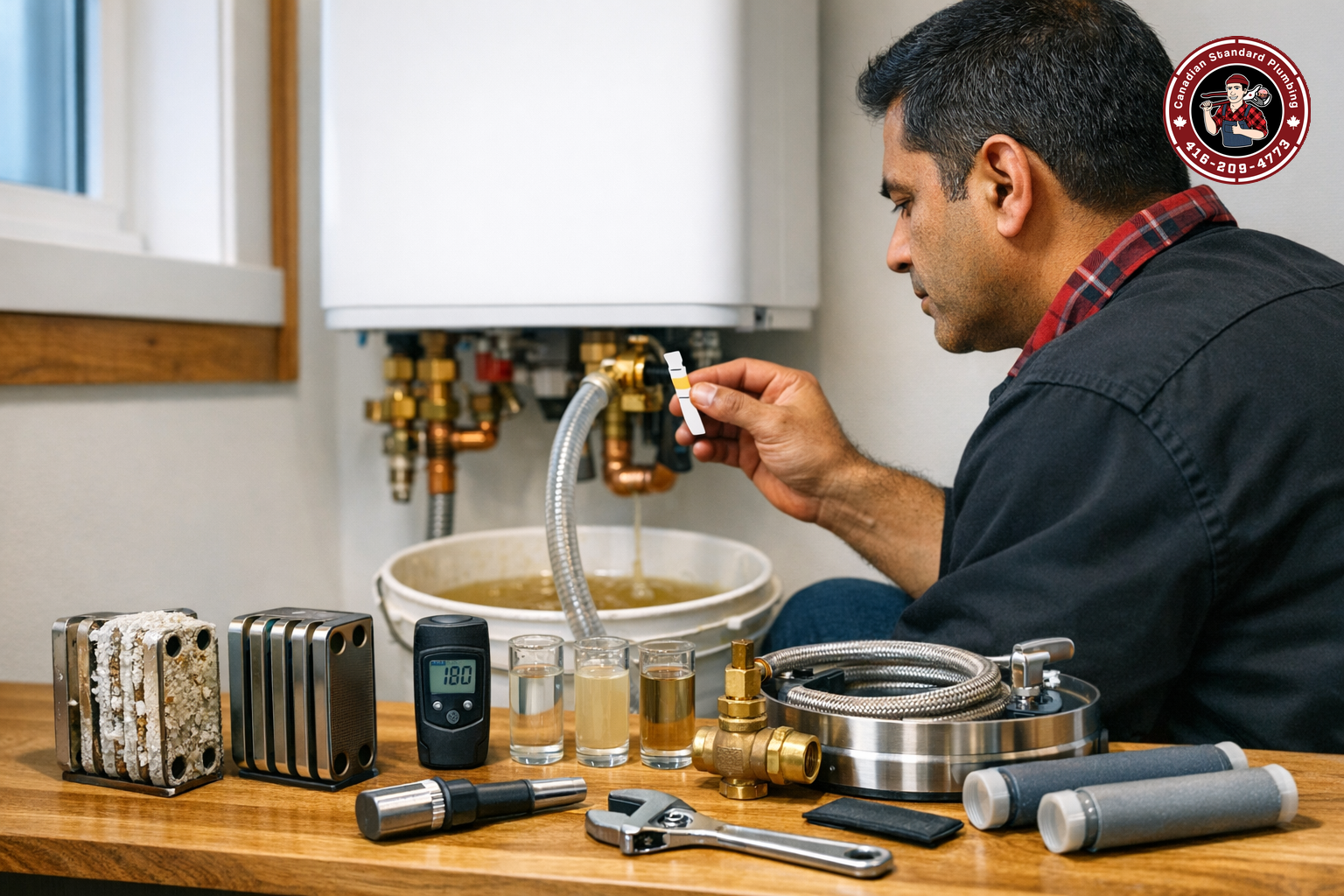
If you’re a homeowner in Aurora, Maple, or Vaughan who’s heard “your water is hard,” you might not know what that actually means for your tankless unit. Hard water contains dissolved calcium and magnesium ions. When cold water enters the heat exchanger at 50°F and is instantly raised to 115°F, those minerals precipitate—they solidify on the copper or stainless surfaces. Over weeks, that layer thickens. The unit has to work harder to push the same volume of hot water through the narrowing passages. Flow slows. Temperature inconsistency appears. Eventually, error codes force a shutdown.
Rinnai’s stainless-steel heat exchanger is durable, but scale tends to cling to it. Navien’s copper core is naturally less hospitable to calcium precipitation, and Navien adds a coating to the interior surfaces, so those units generally shed scale more readily during a flush cycle while Rinnai units can need more aggressive descaling chemistry. The practical takeaway is about maintenance discipline rather than brand loyalty: where descaling gets skipped in hard-water areas, buildup can become heavy enough that a normal flush won’t recover the exchanger and replacement becomes the only sensible option. What that costs depends on the unit, the parts and the access, and we put it in a written quote before any work starts.
This is why we now recommend pairing either brand with a Moen Flo smart water monitor. The Flo device watches for unusual flow and pressure changes—the early warning signs of scale accumulation, and of leaks elsewhere on the water lines—and sends alerts to your phone before a small problem becomes a wet ceiling. Catching a change in performance early usually means a routine descaling flush rather than a major repair. We’ll quote the monitor and its installation in writing before we begin.
Real GTA Install Case Study: Navien Multi-Unit Success
A property manager responsible for three rental units in Vaughan called us after repeated tenant complaints: no hot water at peak hours, and rising gas bills. Each unit had an aging 40-gallon tank, and the symptoms pointed to sediment accumulation in the bottom of the tanks—a sign of mineral-laden water and deferred maintenance. One option was replacing all three tanks like for like. Instead, we evaluated whether the three units could share a single high-capacity tankless system, and we put both paths in writing so the owner could compare them side by side before deciding.
We sized the system around the building’s realistic peak demand—showers running in two units plus a sink—and confirmed that one Navien tankless unit could carry that load with headroom to spare. We converted all three units from their aging 40-gallon tanks to that single system, including the venting and gas line work. Per the utility bills the property manager shared with us afterward, their monthly gas consumption dropped 28%, and the tenant calls about no hot water stopped. We also installed a tempering valve downstream so outlet temperature stays consistent when more than one unit draws hot water at the same time. Savings will always depend on rates and how a building actually uses hot water, so we scope and quote this kind of conversion in writing before starting.
When to Choose Rinnai vs Navien in Hard Water
- Your water is on the softer side (ask your municipality for its hardness reporting, or have your water tested, rather than guessing).
- You want to keep the upfront spend down and you’re willing to commit to regular descaling service, which we’ll quote in writing.
- You plan to stay in the home a relatively short time and the manufacturer’s warranty covers your expected holding period.
- You prioritize first-cost savings and can commit to maintenance discipline.
- Your water hardness exceeds 250 mg/L (most of central York Region qualifies; Richmond Hill and Thornhill test above 300 mg/L).
- You want to minimize service calls and descaling costs—every 18–24 months beats every 12 months in hard water.
- You’re planning a 15+ year stay and want the longest mean-time-between-failures (MTBF).
- You’re renovating multiple bathrooms or a whole home (the 12-year warranty and scale resilience justify the investment).
- You run light-commercial applications (rental units, small office buildings) where downtime is costly.
Our Verdict: Which Brand Wins in Toronto Hard Water
For GTA hard-water homes and light-commercial properties, Navien is our first recommendation—but not universally. Here’s the logic we apply when a homeowner or property manager sits down with us to choose.
If you live in a high-hardness area (Richmond Hill, central Thornhill, parts of Markham, or Woodbridge), Navien’s heat-exchanger durability and longer warranty coverage tend to pay off over a decade of ownership, mostly by stretching the interval between descaling visits. Fewer service visits over the life of the unit is the real saving, and it usually offsets the higher purchase price somewhere in the middle of that ownership window. We’ll put the actual numbers for your home in a written quote before any work starts, so you can compare the upfront difference against the maintenance you’re likely to need.
If your water hardness is only moderate, or you’re working to a tighter budget, Rinnai is a defensible choice. More frequent descaling is annoying but manageable if you set calendar reminders and stay ahead of error codes. The lower entry price appeals to buyers who don’t mind a more hands-on approach to ownership. Ask us for a written quote on both options and we’ll lay out the difference for your situation.
Here’s what tips the scales for us: skipped maintenance costs more than the unit ever did. When a tankless unit goes unserviced in hard water, scale builds inside the heat exchanger, flow drops off, and what would have been a routine descaling turns into an aggressive flush and a day without hot water. Owners who then commit to servicing it on schedule often spend more on maintenance over a few years than the upfront difference between brands ever was. That’s why we talk about the maintenance plan before we talk about the model — the convenience and the peace of mind are worth more than the sticker difference.
Navien wins for Toronto hard-water homes. The 12-year warranty, scale-resistant copper heat exchanger, and lower maintenance frequency deliver better long-term value. Rinnai wins if budget is the primary constraint and you’ll commit to annual descaling. Neither brand is “bad”—the choice depends on hardness level, maintenance discipline, and how long you plan to own the home.
What Most Homeowners Get Wrong About Tankless Maintenance
One common mistake we correct almost weekly: homeowners assume tankless water heaters are “maintenance-free” because they don’t have a tank to drain. Wrong. In hard water, descaling is more critical than it is for tank units, because every single degree of scale reduces heat transfer. A tank unit loses efficiency too, but you can drain sediment from the bottom. Tankless units require either a professional flush or an inline descaling cartridge (we recommend the latter for homes over 250 mg/L hardness).
Another mistake: buying a bargain tankless unit from a big-box retailer. We regularly get emergency calls from homeowners who installed an import brand, ran it fine for the better part of a year, then hit an error code. Parts aren’t stocked locally, shipping drags on, and the warranty is little help because the retailer who sold it has no service department. We recommend Rinnai or Navien from day one, even though they cost more, because the parts ecosystem and support network in the GTA are solid — common replacement parts are available quickly, and that’s the difference between hot water back the same day and waiting weeks.
Tankless Water Heater Installation in the GTA: What to Expect
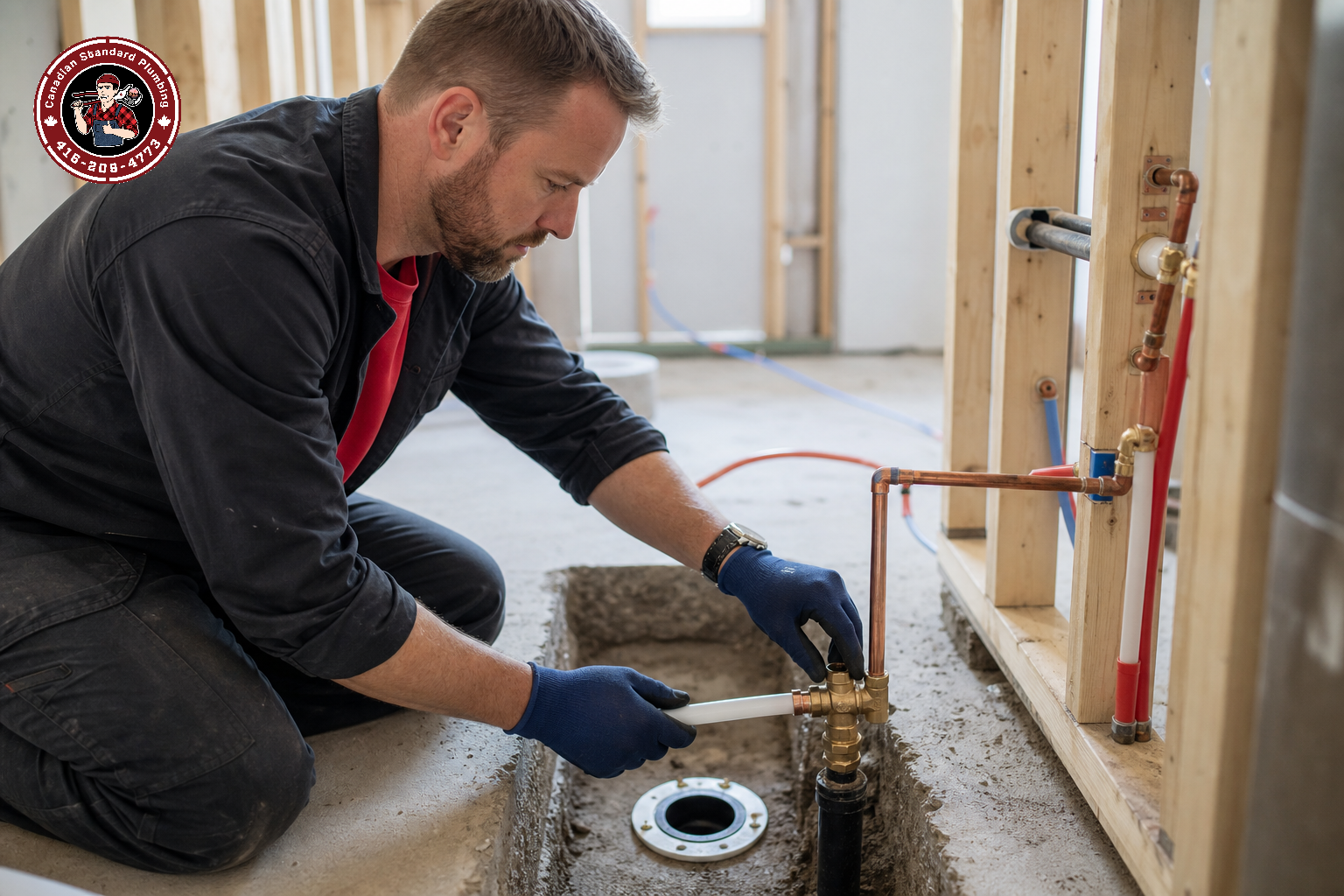
Installation cost for a Rinnai or Navien unit comes down to the unit itself plus the labour and materials your home actually needs, and the labour portion moves quite a bit with complexity. We give you a written quote before any work starts. Here’s what drives the variance:
Gas Line Sizing
Tankless units demand more gas than tank units. If your existing gas line is undersized (common in older Toronto and North York homes), we need to upsize it. That adds material and labour to the job, and how much depends on the run length, access and how your existing gas system is laid out — we confirm the sizing on site and put the full scope in a written quote before any work starts.
Venting Location
Both Rinnai and Navien require sealed-combustion venting. If your old tank heater vented through the chimney, we may need to install a new vent run. A sidewall run through an accessible exterior wall is simpler than a roof penetration that needs flashing and exterior sealing, and that difference is one of the bigger swing factors in the final number. We’ll show you the options and price them in writing first.
Water Supply Lines
Polybutylene or old copper corroded from hard water? We may recommend replacing supply lines with quality stainless-braided connectors while we’re already in there — it’s a small add-on compared to doing it as a separate call later. It also heads off the braided-connector failures we’re called out for again and again across Richmond Hill and Etobicoke. Any recommended extras appear on your written quote before we start.
Tempering Valve
Tankless units don’t have the thermal mass of a tank, so outlet temperature can swing if demand spikes. A tempering (mixing) valve stabilizes the delivered temperature and helps guard against scald risk. Requirements vary by jurisdiction, so confirm what applies at your address with your local building department or with us before the install — we’ll include the valve and its labour in the written quote if it’s needed.
On a typical Vaughan or Thornhill retrofit (tank replacement with minimal modifications), we’re looking at 4–6 hours of labor. Our response time is sub-one-hour for emergency calls, but for planned installations, we can usually schedule within 5–7 days.
Pairing Your Tankless Unit with Smart Water Monitoring
If you choose Navien or Rinnai and live in a hard-water area, we strongly recommend adding a Moen Flo smart water monitor, including the smart shutoff valve and Wi-Fi hub. Here’s why: Flo continuously watches pressure and flow patterns on your water supply and flags anomalies people simply don’t notice — a slow drip, a running fixture, an unusual overnight draw. It sends alerts to your phone, and it can shut the water off automatically if something looks like a real leak. We’ll quote the monitor and installation in writing so you can decide with the full picture in front of you.
In Etobicoke homes where we’ve paired a smart shutoff like Moen Flo with a tankless unit, homeowners tend to catch the early signs of scale build-up and unusual flow well before the unit starts short-cycling or throwing faults. In practice that means a planned descaling visit on your schedule rather than an emergency call on the worst possible morning. Just as valuable: if a supply line or braided connector lets go, the shutoff closes the water automatically instead of letting it run until someone gets home — which is the difference between a mop and a restoration crew. We’ll put the cost of the monitor, the install and any maintenance plan in writing before we start.
Frequently Asked Questions
1. Does hard water void the warranty on Rinnai or Navien tankless units?
No. Both Rinnai and Navien warranties explicitly cover hard-water scale damage as a normal wear item. The 10-year Rinnai and 12-year Navien heat-exchanger warranties remain valid even if you live in high-hardness areas like Richmond Hill (300+ mg/L). However, both manufacturers recommend descaling intervals in their manuals—Rinnai suggests annually, Navien every 12–18 months. If you skip descaling entirely and the unit fails, the manufacturer may argue you didn’t follow maintenance instructions. In practice, we’ve filed successful warranty claims even in high-hardness zones because homeowners did pursue some level of maintenance.
2. How much does it cost to descale a Rinnai versus a Navien unit in the GTA?
Descaling costs are roughly the same for either brand — what actually differs is how often you need it. In hard water, Rinnai units generally want descaling on a shorter interval, while Navien’s scale-resistant heat exchanger tends to stretch the gap between services. Over ten years, that difference in frequency, together with Navien’s longer warranty coverage, usually matters more than the difference in purchase price. Check the recommended interval for your specific model in the manufacturer’s documentation or ask us, and we’ll give you a written quote covering both the unit and the ongoing maintenance so you can compare the real lifetime cost.
3. Which tankless brand has better parts availability in Toronto and York Region?
Both are well-stocked. We carry Rinnai and Navien parts in the van most days—control boards, diverter valves, flow sensors, and venting components. Rinnai parts are slightly more common simply because Rinnai has higher market penetration in older GTA homes. But Navien parts are readily available through our distributors with next-day delivery if we run out of stock. Import-brand tankless units from big-box retailers are where parts availability becomes a nightmare; we avoid recommending those entirely.
4. Can a tankless water heater handle multiple showers simultaneously in a Vaughan or North York home?
Yes, if properly sized. A Rinnai R94LSi or Navien 240A unit delivers 9.5–11 GPM, which supports simultaneous showers in a two-bathroom home with a sink or shower elsewhere. We ran a Vaughan property manager’s three-unit building (the case study mentioned above) off a single Navien 240A with no complaints. The key is choosing the correct model for your peak demand and, if going with multiple demands, installing a tempering valve to prevent temperature swings. Most GTA homes fall well within the capacity of a mid-range unit; oversizing is rare and adds unnecessary cost.
Ready to Choose Your Tankless Unit?
If you’re a homeowner in Toronto, Vaughan, Thornhill, Richmond Hill, or anywhere in York Region facing hard water and considering Rinnai or Navien, we’re here to help you avoid the mistakes we’ve seen too often. A quick water test and a short conversation can tell you whether Rinnai’s lower upfront cost or Navien’s durability makes more sense for your situation — and we’ll follow it up with a written quote before any work begins.
We offer flat upfront pricing—no surprises, no upsells. Our 5.0-star reputation across 169+ verified Google reviews reflects our commitment to honest recommendations, and we’re available 24/7 if an emergency hits. Whether you’re replacing an aging 40-gallon tank or upgrading to tankless for the first time, we’ll walk you through the hard-water reality and get you the right unit at the right price.
Canadian Standard Plumbing
Professional service available 24/7. Fast response, experienced technicians, written quotes before work starts.