A Thornhill Property Manager Asked: “Our Condo Building Has Low Water Pressure on the Top Two Floors — What’s Actually Causing It?”

Last updated: July 31, 2026
Published July 31, 2026 · Updated July 31, 2026
Low water pressure on the top two floors of a condo building almost always points to one of three culprits: undersized or blocked supply risers, a failing pressure regulator on the main line, or corroded galvanized pipes eating away at the diameter from the inside. The good news is that we can diagnose which one in a single visit – and the fix is rarely as expensive as most property managers fear.
- High-rise pressure loss is usually not the building’s water supply – it’s internal piping, regulators, or blockages
- A failed pressure regulator is one of the first things we rule out, and replacement is usually straightforward once the unit is located
- Corroded galvanized risers in older buildings can restrict flow silently until replacement is the only fix
- We diagnose with a pressure gauge at the main and at each floor riser – no guesswork
- Tenants often complain about weak showers first because they’re most sensitive to pressure drops
The Short Answer
If your top-floor units lose pressure while lower floors stay normal, the problem is almost never the municipal water supply. It’s a combination of gravity (water climbs higher = pressure drops naturally), and one of three on-site issues: the building’s main pressure regulator is failing and not maintaining system pressure, the risers carrying water upward are corroded or undersized, or there’s a partial blockage somewhere in the upper distribution lines.
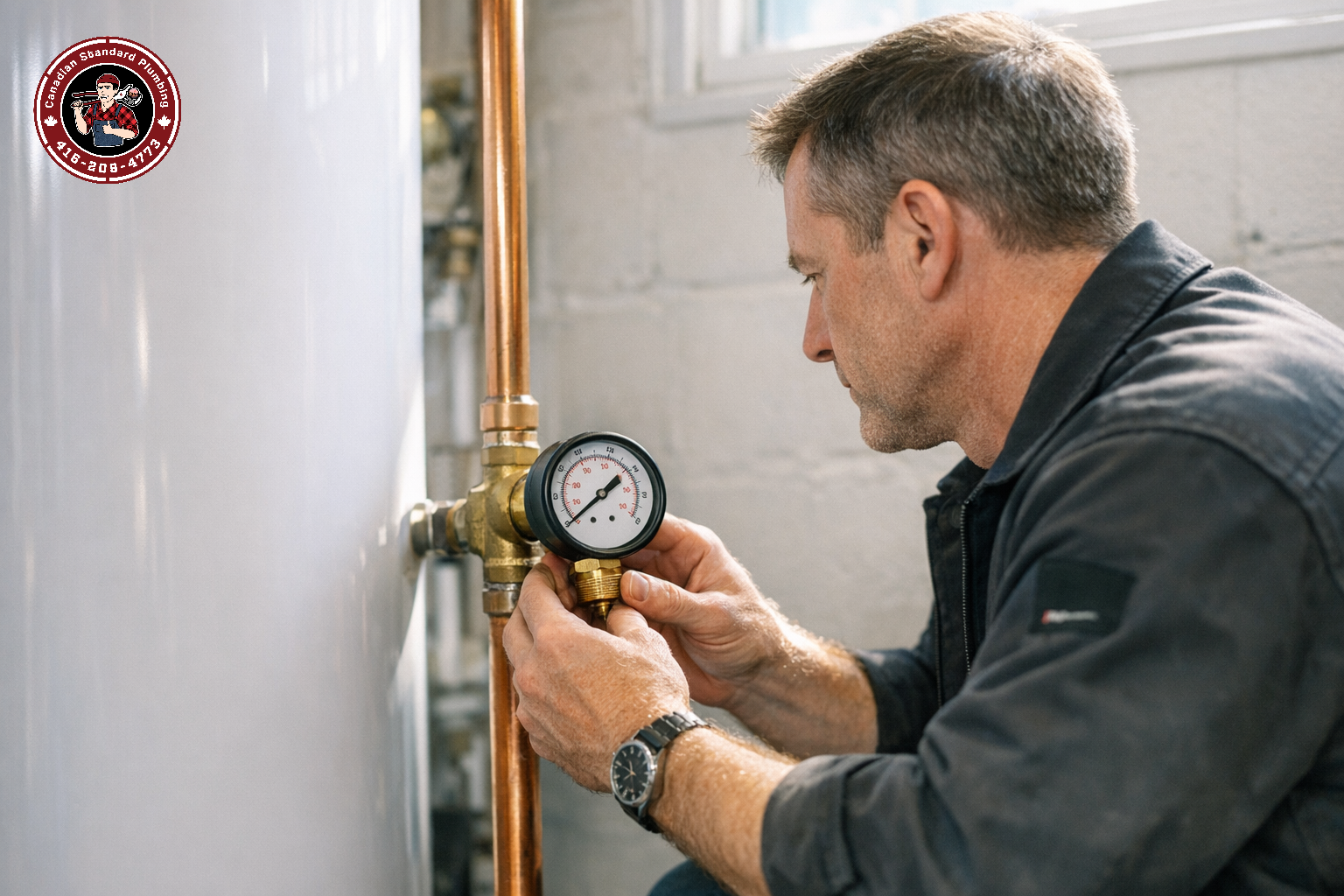
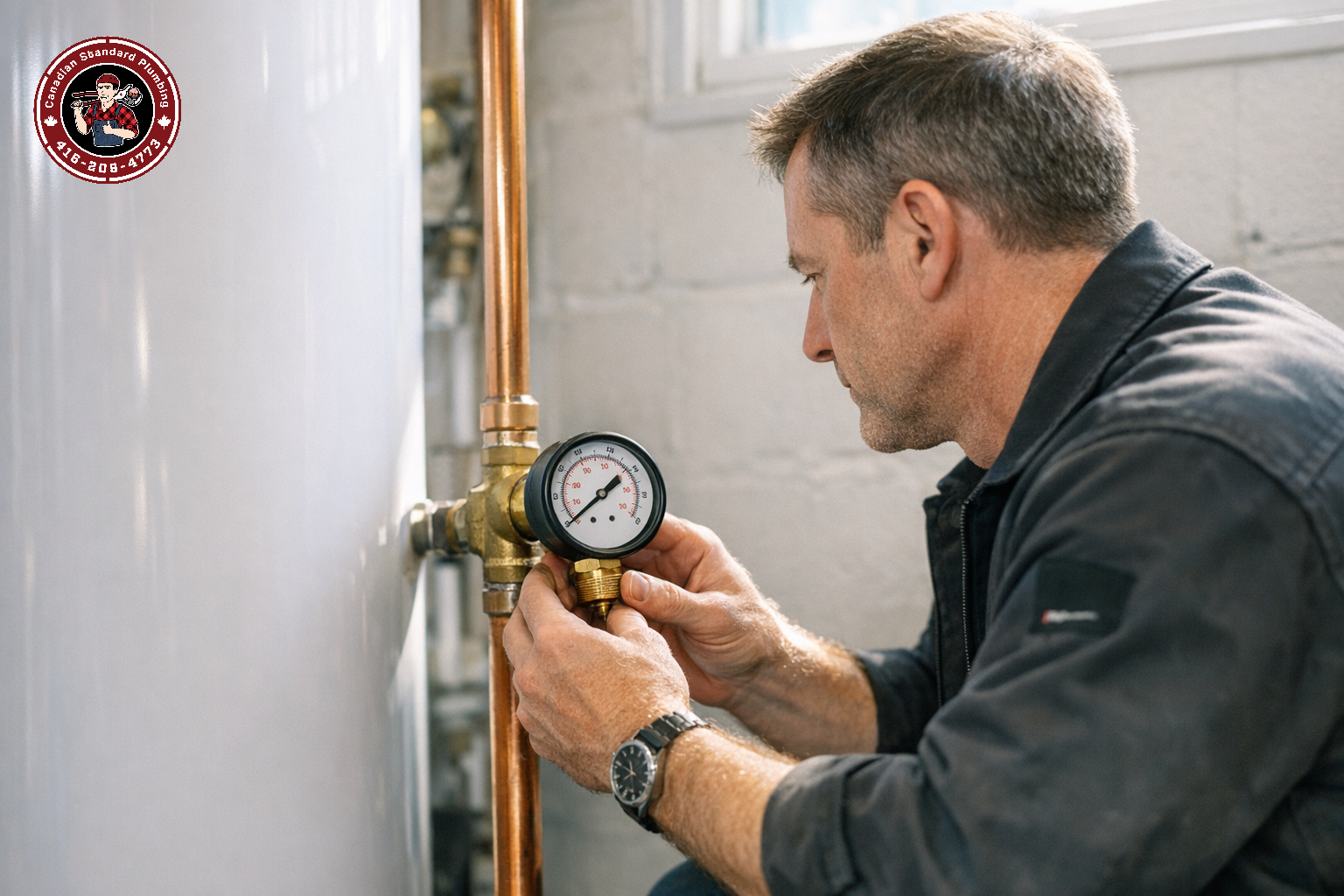
We measure it with a pressure gauge at the main line, then at each floor riser. If the gauge reads 60+ PSI at the street but drops to 20-30 PSI at the top floor, the building’s piping is the culprit – not the municipality. That single test saves you weeks of back-and-forth with property management and the water company.
The Full Answer: Why Top-Floor Water Pressure Dies in Thornhill Condos
1. The Pressure Regulator Is Failing (Most Common Culprit)
Every condo building has a main pressure regulator – usually a brass valve the size of a coffee can, mounted near where the water line enters the building. This device takes the 60-100 PSI coming from the municipality and reduces it to a safe, controlled 40-55 PSI for the building’s internal pipes. When that regulator fails – typically a rubber diaphragm inside wears out – it can no longer hold pressure, and the system loses water pressure throughout the building, with the top floors feeling it worst.
This is a pattern we see in multi-unit buildings: upper-floor units report weak pressure for weeks, and everyone assumes it’s the city’s supply. The test that settles it is simple – we gauge the incoming main first, then the outlet side of the pressure regulator. When the main reads healthy but the downstream side is well below it, the regulator’s diaphragm has failed silently and the whole building is being throttled. Swapping in a quality replacement regulator typically restores pressure across all floors the same visit. We’ll confirm the diagnosis on site and give you a written quote before any work starts.
Honestly, the frustration we see is that other plumbers test it once and move on. A good diagnosis requires isolating the regulator and testing both sides to confirm it’s actually failing – not assuming the symptom.
The main cost drivers are how accessible the regulator is, the size and type of unit your building needs, whether isolation valves also need replacing, and whether you need us outside of standard hours. The hardest part is often simply locating the regulator – it may be in a mechanical room, a basement, or buried behind decades of added piping. Once it’s found and isolated, the swap itself is usually the quick part. We quote in writing before we start.
2. Corroded Galvanized Steel Risers Clogging From the Inside
If your condo building was constructed before 1985, its vertical water risers – the pipes running from the basement up through each floor – are almost certainly galvanized steel. Galvanized pipes survive longer than bare steel (they’re zinc-coated), but they corrode from the inside. Mineral deposits and rust buildup accumulate over decades, slowly shrinking the internal diameter like plaque in an artery. The lower floors, where water pressure is highest, can still force water through the narrowed pipe. But by the time water reaches the fifth or sixth floor, it’s barely trickling.
A Vaughan property manager with a 1978-built six-unit called us about unit 5 having near-zero water pressure in the shower. Units 1-4 were fine. We ran a camera through a 1-inch galvanized riser and found it packed with rust-orange sediment, leaving maybe a quarter-inch of actual opening. No regulator replacement would fix it – the pipe itself was the bottleneck.
The fix is a full riser replacement in PEX or copper. It’s a real project rather than a quick repair, and the scope depends on how many storeys are being re-piped, how the risers are routed, and whether walls or ceilings need to be opened and patched. But once it’s done, pressure normalizes for the long term, and you eliminate the risk of the riser failing catastrophically and flooding the units below. We’ll walk the building, scope the work, and put the whole thing in a written quote so you can budget it properly.
Here’s the mistake property managers often make: they ignore the symptom for months, hoping it goes away. Meanwhile, the corrosion keeps advancing. Eventually the riser ruptures, or the pressure gets so weak that tenants start leaving. A proactive camera inspection on suspect galvanized piping is cheap insurance compared to an emergency repair and a flooded stack of units – ask us for a written quote and we’ll tell you exactly what the inspection covers.
3. Undersized or Blocked Supply Risers (Design Issue)
Sometimes the problem isn’t wear – it’s the original design. A building’s main supply line might be a 1-inch copper pipe, but the risers serving the top two floors could be 3/4-inch – undersized from the start. When multiple units on those floors try to draw water simultaneously (morning showers, someone doing laundry), the 3/4-inch riser can’t deliver enough volume, and pressure crashes.
Alternatively, debris from the original construction – loose solder, scale, or mineral deposits – can lodge in the riser and restrict flow without fully blocking it. A camera inspection reveals this in seconds, and we either flush the line or replace it depending on severity.
If you suspect this, ask the question: when did the weak pressure start? If it’s been there since the building was new, it’s likely a design issue. If it appeared suddenly, corrosion or regulator failure is more likely.
4. Pinhole Leaks in Upper-Floor Risers (Silent Water Loss)
In buildings with copper risers, especially in high-mineral-content water areas (which includes parts of Richmond Hill, Vaughan, and Markham), pitting corrosion can create tiny holes along the riser. Water slowly drains out through these microscopic leaks, and the building’s system loses pressure without any obvious sign – no puddles, no visible water.
We diagnose this with a leak-detection visit, using acoustic tools and pressure monitoring to narrow down where water is escaping. If pinhole leaks are confirmed, re-piping the affected riser is usually the durable fix rather than patching the same line repeatedly. PEX is widely used for potable risers in residential and light-commercial buildings because it isn’t prone to the pinhole corrosion that affects aging copper, and we’ll walk you through the material options for your building before anything starts. What it costs depends on riser length, access and how much of the building is affected, so you get a written quote first.
5. Check Valves or Backflow Preventers Stuck Partially Closed
Condos often have check valves or backflow preventers installed on risers to prevent water from flowing backward (especially in high-rises where gravity can cause reverse flow). If one of these valves gets stuck or only partially opens due to sediment or wear, it acts like a restriction – and the top floors suffer first because they’re downstream.
A quick pressure test on both sides of the valve reveals this. Cleaning or replacing the check valve usually restores normal flow. What it costs depends on the valve type and how accessible it is, so we confirm the scope on site and give you a written quote before we start.
How We Diagnose Low Water Pressure on Top Floors: Our Process
If you’re a property manager in Thornhill, Richmond Hill, Vaughan, or anywhere in the GTA dealing with top-floor pressure loss, here’s what a proper diagnostic looks like – and what separates a real diagnosis from a guess:
Pressure test at the main incoming line
We connect a gauge where the city’s water supply enters the building. If it reads 60+ PSI and the building’s outlet is much lower, your regulator or internal piping is the issue – not the municipality.
Test the pressure regulator both sides
We measure the PSI inlet and outlet of the main regulator. A healthy regulator drops incoming pressure to 40-55 PSI. If the outlet is wildly low (20-30 PSI), the diaphragm has failed.
Test each floor riser individually
We move up the building, testing pressure on the riser serving each floor. If pressure drops significantly between floors 4 and 5, that riser is the culprit – either undersized, corroded, or blocked.
Camera inspect suspect risers
If a riser is decades old, we run a camera through it to see the interior condition. Corrosion, sediment build-up and blockages are instantly visible, which takes the guesswork out of deciding whether to clean, repair or replace. We quote the inspection in writing before we book it.
Write a detailed report with recommendations
You get pressure readings, photos, and a prioritized list of fixes. This becomes your roadmap – and proof for insurance or board decisions.
“The biggest mistake property managers make is treating every pressure complaint the same way. In one building the fix is a straightforward regulator swap; in another it’s a riser replacement, which is a completely different scale of job. Without testing, you’re just guessing – and usually guessing wrong. That’s why we take the time to diagnose properly before we quote anything, and why every quote we give is in writing before work starts.” – Canadian Standard Plumbing Team
Common Costs & Solutions for Top-Floor Pressure Loss
| Problem | Typical Cause | Fix Cost (GTA) | Urgency |
|---|---|---|---|
| Weak pressure only on top 2 floors | Pressure regulator failing | Quoted in writing after assessment | High |
| Pressure weak throughout building | Check valve stuck or clogged | Quoted in writing after we assess the job | High |
| Riser corroded (pre-1985 galvanized) | Interior rust deposits blocking flow | Quoted in writing after we assess the job | Medium |
| Pinhole leaks in upper risers | Copper corrosion in high-mineral water | Quoted in writing after we assess the job | Medium |
| Initial diagnostic (pressure + camera) | Need answers before committing to fix | Quoted in writing after we assess the job | Low |
When the Answer Is Different: Edge Cases
If Only One Unit Has Weak Pressure
Don’t assume it’s the building’s main system. First check the individual unit’s shut-off valve (usually under the sink or in a closet) – it may be partially closed. Next, check the unit’s internal supply lines and fixtures. A clogged aerator, a failing fill valve in the toilet, or a cracked internal line is far more common than a building-wide issue. Rule out the small, fixture-level causes first – sometimes it comes down to nothing more than a dirty faucet screen, and that saves everyone a much bigger investigation.
If Pressure Is Weak But Water Is Discolored (Brown or Cloudy)
This often signals sediment or rust dislodging inside corroded pipes. It’s usually temporary (happens during high-demand hours or after maintenance upstream), but if it’s persistent, the riser is corroding fast. Run a camera immediately – you may need to expedite the replacement before a rupture happens. In the meantime, install a mesh strainer on tap aerators to catch debris.
If Pressure Drops During Peak Morning Hours But Returns to Normal After 9 AM
This is classic undersized piping. The riser serving those floors doesn’t have enough volume to handle simultaneous demand (showers, toilets, laundry). It’s a design issue, not wear. You can either reduce demand (educate tenants to stagger usage) or upgrade the riser – a costly solution unless you’re doing a major renovation. Some buildings install a small pressure tank to buffer peak demand; the cost depends on the tank size, where it can be mounted and how much repiping the tie-in requires, and we’ll put a written quote in front of you before any work starts.
If the Building Recently Converted to Smart Water Monitoring (Moen Flo or Phyn)
Smart shutoff systems like the Moen Flo monitor for leaks and can restrict flow as a safety measure if they detect unusual patterns. If you installed one on the main line and suddenly top-floor pressure dropped, the device may have flagged a leak upstream and limited flow. Check the app, or call us and we’ll confirm whether the system is throttling intentionally.
Preventive Measures for Condo Building Pressure Issues
If you’re a property manager in Thornhill, Vaughan, Richmond Hill, Markham, or anywhere in the GTA, here’s how to avoid pressure emergencies:
- Test your pressure regulator on a regular schedule. A simple pressure-gauge test catches a failing regulator before it destroys system pressure. Replacement, when it’s needed, is far less disruptive than months of tenant complaints – we’ll quote the swap in writing once we’ve seen the valve and its tie-in.
- If your building was built before 1990, commission a riser camera inspection. Know whether you’re sitting on corroded galvanized or solid copper/PEX. An inspection upfront costs a fraction of what an emergency riser replacement does, and it lets you plan the work on your schedule instead of during a flood. We’ll give you a written quote for the camera work before we book it.
- Install a Moen Flo or Phyn smart water monitor on the main line. These systems detect leaks early – including pinhole leaks in risers that would otherwise drain pressure silently for weeks. They also alert you to unusual water use patterns. Install cost depends on the device you choose and how accessible your main line is; we’ll quote it in writing first.
- Flush the main filter/strainer annually. Sediment from the municipal supply accumulates in the building’s strainer. A simple flush removes debris before it clogs check valves or risers.
- Educate tenants to report pressure changes immediately. A complaint in week one is fixable. A complaint in month three usually means the problem has progressed significantly.
A Real Case: The Thornhill Bathurst Building
A property manager managing three rental units on Bathurst in Thornhill kept getting calls from tenants on the top floor (unit 3) about barely getting water flow from the shower. The lower two units were fine. Two other plumbers had looked at it and blamed “low municipal pressure” – told her to call the city.
We came out on a Tuesday morning and pressure-tested the main. The city’s supply was 68 PSI – excellent. The building’s main regulator inlet was 68 PSI, but the outlet was only 34 PSI. We tested the riser serving unit 3 and it read 22 PSI at the shower. The regulator diaphragm had failed.
When testing points to a failed regulator, we replace it with a quality brass-bodied unit, re-test the system and confirm pressure has recovered consistently across the units. Where it makes sense, we’ll also fit a pressure-monitoring smart valve on the main so the early signs of regulator wear show up long before a failure does. We’ll put the regulator, the labour and any monitoring hardware in a written quote before we start.
This is where a smart water monitor earns its place in a rental or multi-unit building. Instead of waiting for a tenant to notice a stain on a ceiling, the monitor flags unusual flow and you can call us to investigate. A slow weep at a braided supply connector under a kitchen sink is a small repair when it’s caught early – and a much bigger one once it has soaked through to the unit below.
Frequently Asked Questions
We offer sub-one-hour response for emergency callouts across the Greater Toronto Area and York Region, available 24/7. For non-emergency diagnostics, we typically book within 48-72 hours. If your top-floor units have zero water and tenants are unable to shower or use toilets, we treat it as an emergency.
Rarely, and almost never in isolation. A basic pressure test at your building’s main line will confirm whether municipal pressure is the issue. In our experience, 95% of top-floor pressure complaints are due to the building’s internal piping, regulator, or valve issues – not the city’s supply. The municipality has no incentive to under-pressure your building; they want good flow too.
It depends on your risk tolerance. Living with weak pressure is annoying for tenants, but it’s safe. The real risk is that a corroded riser ruptures suddenly, flooding walls and ceilings. A camera inspection tells you how much of the interior bore is left. If the pipe is heavily scaled but still flowing, replacement can often be planned rather than rushed. If it’s severely blocked, it becomes urgent. Many boards fold a riser replacement into their multi-year capital plan – we’ll assess the riser and give you a written quote you can budget against before any work is scheduled.
Technically, yes – but we recommend against it. Entry-level big-box regulators may work for a while, but they’re often not rated for continuous multi-unit duty and can fail prematurely. Brands like Watts, Caleffi and Amtrol build valves intended for commercial and multi-unit buildings and back them with longer warranties. Our quotes include the regulator itself plus full installation and post-install testing, and we put it in writing before we start. Cheaping out on the valve often means a callback well inside the life you were expecting.
Sources
- Water pressure standards for multi-unit residential buildings – Government of Ontario: Water Supply Quality
- Galvanized pipe corrosion and lifespan – Building Science Institute: Water Service Line Materials
- Pressure regulator maintenance requirements – American Water Works Association: Standards
- Moen Flo smart water monitor specifications – Moen Flo Official Product Page

Canadian Standard Plumbing
Professional service available 24/7. Fast response from our own experienced team.
🎧 Listen to article
- How We Re-Piped a 1962 Woodbridge Bungalow with Corroded Galvanized Pipes — and Restored Full Water Pressure i
- Moen Flo vs Moen Smart Water Shutoff: Which Smart Leak Monitor Actually Makes Sense for a Toronto Condo
- A Customer Asked: “My Hot Water Runs Out After 8 Minutes — Is My Bradford White Tank Dying or Just Sediment-Lo
- A Vaughan Customer Asked: “Why Is My Water Heater Popping After 8 Years?” — The Real Cause
- Moen Flo vs Phyn Plus: Which Whole-Home Leak Detection System Actually Earns Its Price Tag in a North York Sem