Bradford White vs Rheem vs Navien: Which Water Heater Holds Up in Toronto’s Hard Water Conditions

Last updated: July 6, 2026
When we pull up to a Toronto home with a failed water heater, the homeowner usually has no idea which brand matters—or whether the hard water that’s been running through their pipes for seven years already damaged the one inside. After fifteen years in the GTA, we’ve replaced hundreds of units across Vaughan, Richmond Hill, Markham, and Etobicoke, and the pattern is clear: Bradford White and Navien handle our water chemistry better than Rheem, but the right choice depends on whether you want a tank or tankless, your budget, and whether you’re planning to stay in the house another decade.

- Bradford White tanks are built for mineral-heavy water; we spec them for long-term residential in Toronto, York Region.
- Navien tankless can lower operating costs, but it needs soft water and regular maintenance—one Vaughan property manager we moved from three aging tanks to a single tankless reported a 28% drop in their monthly gas bill.
- Rheem costs less upfront but corrodes faster in hard water; we don’t recommend it for GTA homes without water softening.
- What replacement costs depends on the unit, the venting, and the gas or electrical work involved—tankless is a bigger job than a like-for-like tank swap. We give you a written quote before any work starts, and either investment fails early if hard water destroys the interior.
Comparison: Bradford White vs Rheem vs Navien
Here’s how these three stack up on the criteria that actually matter in Toronto’s hard water environment:
| Attribute | Bradford White | Rheem | Navien |
|---|---|---|---|
| Tank Type Available | 40–50 gal (residential), 75–100 gal (light commercial) | 40–50 gal standard, limited commercial | Tankless only (point-of-use or whole-home) |
| Hard Water Durability | Excellent—heavier sediment trap, superior glass lining | Good but corrodes faster; needs softening to last 10+ yrs | Excellent—no tank to corrode; mineral buildup requires annual flush |
| Installed Cost (GTA) | Standard 40–50 gal tank — quoted in writing once we’ve seen the space | Standard 40–50 gal tank — generally the lower-cost option upfront; quoted in writing | Whole-home tankless — a larger job than a tank swap; quoted in writing after we assess gas and venting |
| Energy Efficiency | 88–92% AFUE | 87–90% AFUE | 95–98% AFUE (28%+ gas bill savings typical) |
| Warranty | 6-year tank, 1-year parts; lifetime availability | 6-year tank, 1-year parts; parts harder to source | 10-year heat exchanger, 5-year parts; excellent support |
| Maintenance Burden | Flush annually, inspect anode rod every 3 years | Same as Bradford, higher risk if skipped | Annual descale (chemical flush) recommended; harder to DIY |
| Best For | Long-term GTA homeowners; proven longevity | Budget-conscious buyers; 5–7 year hold horizon | Low-maintenance homes; multi-unit properties; renters |
Bradford White: The Tank Built for Toronto’s Mineral Load
Bradford White tanks arrive at our warehouse with a noticeably heavier construction than the competition. The glass lining is thicker, the sediment trap is oversized, and the anode rod—the sacrificial metal that protects the tank interior from corrosion—is larger and positioned to handle prolonged exposure to hard water minerals.
We spec Bradford White for homeowners who plan to stay in their Toronto, Vaughan, or Richmond Hill home for 10+ years and don’t have a water softener. Hard water in the GTA carries mineral content that ranges 250–350 PPM depending on your neighborhood—that’s well above the national “hard water” threshold of 120 PPM. That mineral load kills cheap tanks in 7–8 years. Bradford White tanks routinely survive 12–15 years, even without softening.
The downside: Bradford White sits at the higher end for a standard 40–50 gallon unit. You’re paying for durability. If your money is tight and you’re renting or selling within a few years, that premium doesn’t pay for itself. Also, Bradford White doesn’t have the same distribution network as Rheem—if a part fails outside our service area, sourcing can take longer. We’ll walk you through the trade-offs and put the numbers in a written quote before we start.
Bradford White is the insurance policy for hard-water GTA homes. Higher upfront cost, but expects 12–15 year life and handles mineral buildup without a softener.
Rheem: The Budget Tank That Corrodes Faster
Rheem tanks generally land at a lower installed cost than Bradford White, and in Etobicoke and North York, where budgets matter, that difference gets noticed. Rheem’s efficiency ratings are respectable—not bottom-tier, not exceptional. We’ll put the actual numbers for your home in a written quote before any work starts.
The problem: Rheem’s glass lining is thinner, and the sediment trap is smaller. In Toronto’s hard water, Rheem tanks start corroding visibly around year 8–9. I’ve pulled units from Maple and Concord homes that developed visible rust stains inside the tank jacket by year 10. That’s not catastrophic—the tank still functions—but it signals the interior is degrading.
If you pair a Rheem with a water softener, the story changes. Soft water removes the minerals that attack the glass lining. Rheem tanks with softeners last 10–12 years, and the lower upfront cost becomes the smart choice. But if you’re buying a Rheem and skipping the softener? You’re betting on 7–8 years of life, not 12–15. That’s fine if you’re renting or selling soon. It’s a mistake if you’re staying.
Another reality: Rheem parts are easier to find than Bradford White parts, which matters if you need a valve or thermostat replaced at 9 PM on a Sunday. We keep Bradford White spares in the truck; Rheem, we often source same-day from a local supplier.
Rheem works best for homeowners with a water softener, a short timeline, or a tight budget. Without softening, expect corrosion by year 9.
Navien: The Tankless Alternative That Saves Gas
Navien tankless water heaters carry a noticeably higher installed cost than a Bradford White tank. But here’s the case for the premium: a Vaughan property manager with three rental units kept getting tenant calls about no hot water, and we converted all three from aging 40-gallon tanks to a single Navien tankless serving the building. Per their own reports, their monthly gas bill dropped 28%. If you want to weigh that trade-off for your building, we’ll walk through the options and give you the numbers in writing before we start.
Tankless works differently. Water flows through a heat exchanger only when you demand hot water—no standing losses from keeping 40 gallons hot 24/7. Navien’s AFUE is 95–98%, the highest of the three brands. If you use 50+ gallons of hot water daily (typical for a family of four or a busy rental building), the math favors tankless within 8–10 years.
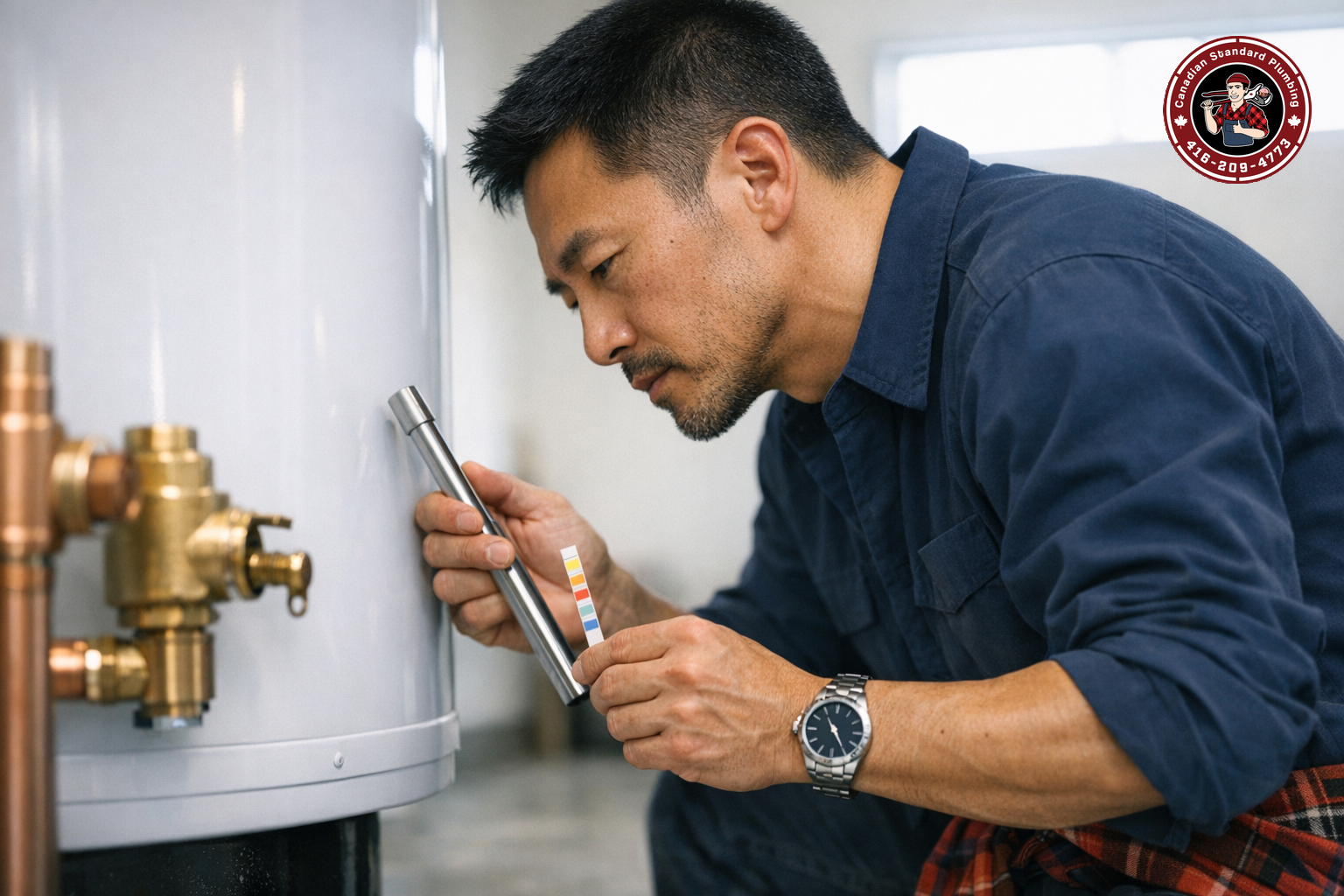
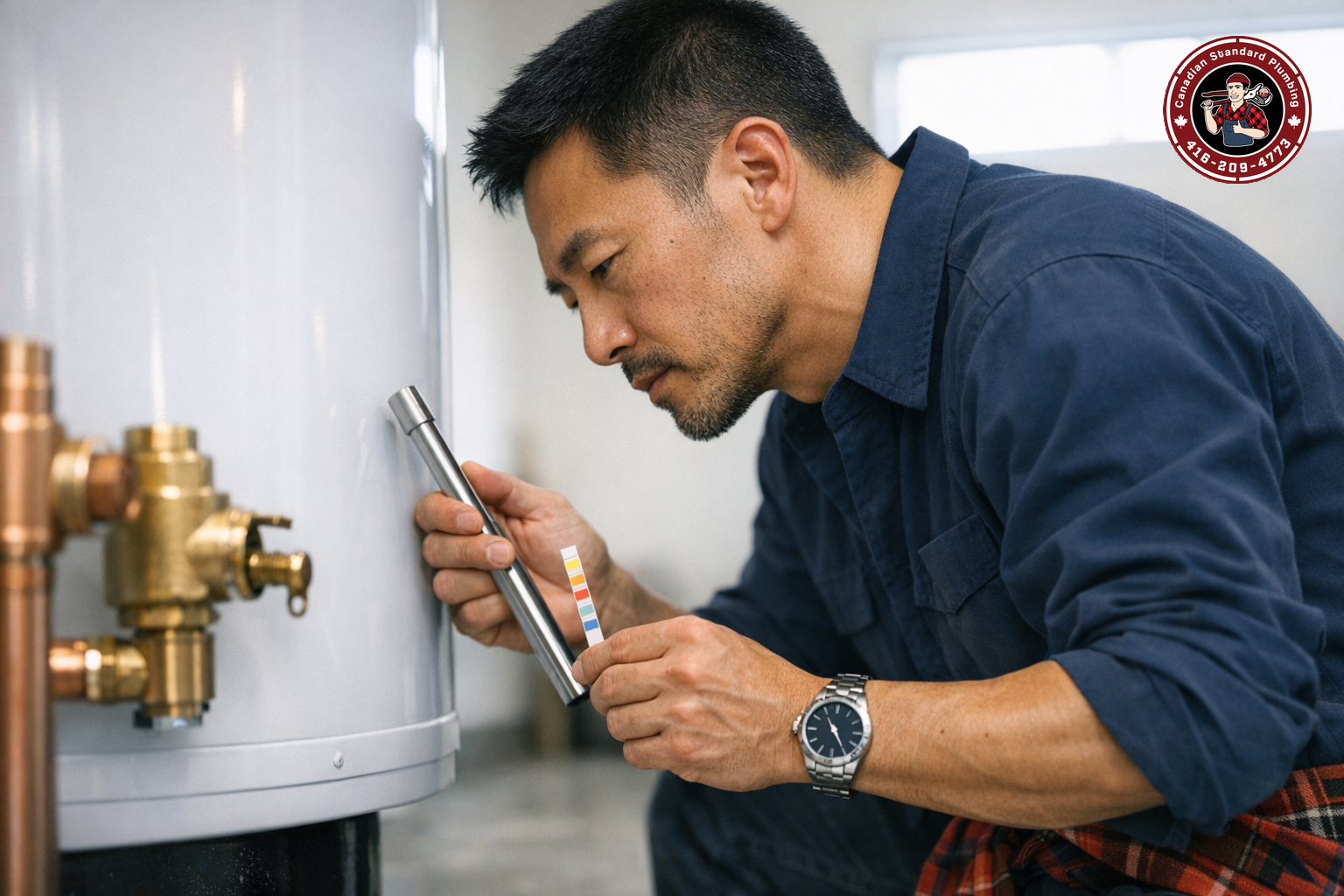
The catch: hard water is harder on tankless than it is on tanks. The Navien heat exchanger is compact, so mineral buildup restricts it more aggressively than scale accumulates in a large tank. If you run hard water through a Navien without treatment, you’re committing to regular descaling flushes—and skipping them shortens the unit’s life and eventually leads to fault codes and shutdowns. That’s where the story gets complicated for GTA homeowners, so ask us what that maintenance schedule actually looks like before you commit.
Navien’s 10-year heat exchanger warranty is the best in class, and their customer support is exceptional—we’ve called their tech line at 11 PM on a Wednesday and gotten an engineer who diagnosed the problem in three minutes. Parts are North American stock, not overseas. That matters if you have an error code at 6 AM on a Tuesday.
One last truth: some homeowners buy a bargain tankless unit from a big-box store, install it themselves, and then call us when the control board errors. Non-stocked import units can be slow and expensive to source parts for, which can leave you without hot water for a long stretch while you wait on a shipment. We only install Navien or Rinnai (both with North American distribution) because the callback risk isn’t worth the upfront savings.
Navien is the efficiency leader and best for renters, multi-unit buildings, and homeowners committed to annual maintenance. It costs more upfront but cuts gas 25–30% if you use hot water daily.
When to Choose Which Water Heater for Toronto Hard Water
- You’re staying in your Toronto, Vaughan, or York Region home for 10+ years
- You don’t have a water softener and don’t plan to install one
- You want maximum durability and minimal maintenance (annual flush is enough)
- You value local parts availability and a stable manufacturer warranty
- You have a water softener already installed or plan to add one
- You’re renting or plan to move within 5–7 years
- Your budget is tight and every dollar of the installed cost matters
- You want the fastest parts availability (Rheem is widely stocked)
- Your household or building draws heavy hot water through the day (a larger family, or a multi-unit rental)
- You’re willing to keep up with an annual descale/flush, or to soften the incoming water
- You want the lowest running costs and the highest efficiency of the options here
- You’re a property manager or landlord managing multiple units (Navien scales better than multiple tanks)
Our Verdict: Bradford White for Most GTA Homeowners, Navien for Multi-Unit Properties
If we’re replacing a water heater for a family in Toronto, Richmond Hill, Thornhill, or Markham who plans to stay put, Bradford White is usually our answer. The hard water around here is too aggressive for Rheem without softening, and the upfront cost of Navien doesn’t pay back fast enough for a single-family home with moderate daily hot water demand. Bradford White gives you stable, predictable hot water over a long service life — and we’ll put the full installed cost in a written quote before any work starts.
If you’re a property manager like our Vaughan client — three rental units, tenants constantly calling about no hot water — Navien tankless can be the investment that pays for itself. We converted all three aging tanks to a single Navien serving the building, and they reported a 28% drop in their monthly gas bill afterward. Just as valuable, you stop fielding the “no hot water” emergency calls that land at 9 PM on a Friday night in January. We’ll quote the conversion in writing before we begin so you can weigh the payback yourself.
Rheem fits a narrower use case: you have a water softener installed, your timeline is short, and your budget is tight. It’s not a bad tank—it’s just not optimized for our water chemistry unless you treat the water first.
One final note: whatever you choose, don’t ignore maintenance. We get called out on freezing Toronto mornings because an annual flush was skipped and mineral buildup choked the burner. A yearly flush is one of the cheapest things you can do to protect the unit and stretch its service life, and it’s far less disruptive than an unplanned replacement in the middle of winter. Ask us and we’ll quote it in writing and fold it into your service schedule.
Common Mistakes to Avoid with Hard Water and Water Heaters
We see the same costly errors repeat in GTA homes. Avoid these and you’ll protect your water heater investment:
Buying a tankless unit at a big-box store without checking the parts supply chain
A budget import tankless looks attractive until the control board fails and you’re waiting weeks for a part you also have to pay for. We recommend Rinnai or Navien only — both have established North American distribution, so parts are far easier to source when something goes wrong.
Skipping annual flushes and anode rod inspections
Hard water mineral buildup doesn’t announce itself. A tank that never gets flushed can give up years earlier than one that does. Have the anode rod checked at the interval your manufacturer recommends, and replace it once it’s worn thin — that’s the part designed to corrode so your tank doesn’t. We’ll put the cost of that work in writing before we start.
Installing a cheap water softener and thinking your problem is solved
A bargain softener off a hardware store shelf does little against the hard water we deal with across Toronto and York Region. If softening is part of your plan, have your water tested first and size the system to the hardness that test actually reports — match the equipment to the result, not to the price tag. Otherwise the mineral load keeps working on your tank.
Choosing the cheapest tank and betting you’ll stay short-term
Life happens. That Etobicoke home you bought as a five-year rental becomes a ten-year home when the job moves closer. A bargain tank that corrodes early turns into an emergency replacement in the middle of winter — and after-hours emergency work always costs more than work you plan for. Either way we quote in writing before we start, but the planned conversation is the cheaper one.
Real-World Water Heater Replacements in the GTA
Here’s what actually happens when we show up to a water heater failure in your neighborhood:
Richmond Hill, 11 PM emergency call: A homeowner noticed water pooling under the kitchen sink—not from the sink itself, but from the water line running to it. We diagnosed a failed braided supply line connector and replaced it with a stainless braided connector, then installed an emergency shutoff valve right there that night. We gave them the after-hours cost in writing before we started. Could have been worse—if that connector had let go completely, we’d be looking at water damage to the cabinets and subfloor.
Vaughan, three-unit rental building: A property manager had been getting tenant complaints about “not enough hot water” for months. Turns out all three units were running the same ancient 40-gallon tank from 1998—it had lost capacity from mineral buildup. We converted the whole building to a single Navien tankless. Gas bill dropped 28% per the manager’s year-over-year bills. Tenants got unlimited hot water. One investment solved two problems.
King City bathroom renovation: A client renovating their primary bathroom found cracked terrazzo around the toilet after years of a slow leak. We did a full rough-in repipe of the bathroom waste line in PEX and installed a Toto Aquia IV—no leaks since. What a job like that costs depends entirely on scope: how much of the waste line has to come out, what’s behind the walls and floor, and what fixtures you’re setting. We price it in writing after we’ve seen it. That’s also why we catch leaks early—we offer leak detection visits before a small leak turns into a renovation.
Water Heater Lifespan: What to Expect in Toronto Hard Water
In ideal conditions (soft water, annual maintenance), a tank water heater lives 12–15 years. In Toronto hard water without softening, you’re looking at 8–11 years depending on the brand. Navien tankless, if descaled annually, runs 15+ years. If neglected, it errors out at 5–7 years.
Here’s the reality we observe: most homeowners don’t maintain either type. They forget the annual flush. They ignore the slow pressure drop at the tap. By the time they call us, the unit is 9 years old, running on fumes, and needs replacement now—not next month. That’s why we recommend Bradford White for people who will skip maintenance. It tolerates neglect better than Rheem. And it costs less than the emergency replacement call when Navien errors out in January.
Water Quality Monitoring: Moen Flo and Beyond
If you’re serious about protecting your home, consider a smart water monitor like Moen Flo. A Moen Flo shutoff installed at the main alerts your phone if water usage spikes overnight—that’s usually the moment a supply line fails inside a wall. It also shuts the water off automatically when a major leak is detected, which can prevent extensive damage. We’ll put the supplied-and-installed cost in writing before we start.
It won’t solve hard water mineral buildup, but it catches the leaks that hard water corrosion creates—like the Richmond Hill braided connector failure we mentioned. It’s a real investment, but a far smaller one than repairing a flooded basement or a burst pipe in a cold attic. We’ll quote it in writing before any work begins.
Frequently Asked Questions About Water Heaters in Toronto Hard Water
Q1: Does hard water really affect water heaters that much, or is it just a sales pitch?
Hard water is absolutely real, not a sales pitch. Toronto and York Region hard water is 250–350 PPM (parts per million), compared to the EPA’s 120 PPM threshold for “hard.” Every gallon of hard water leaves behind mineral deposits—calcium and magnesium—that accumulate inside your tank’s glass lining and on tankless heat exchangers. After 8–10 years in a tank without softening, that buildup can reduce capacity 20–30% and block heat transfer. In a Navien tankless, it errors the unit out. We’ve seen it happen. Soft water (or no water heater at all) eliminates this problem entirely.
Q2: Is a Navien tankless worth the upfront cost for a typical Toronto family?
For a household that runs a lot of hot water, it can make sense. Our Vaughan property manager reported a 28% cut in their monthly gas bill after we converted three aging tanks to a single Navien tankless serving the building. Whether the higher upfront cost pays back depends on how much hot water you actually use—a couple who’s out of the house all day will wait far longer to break even than a busy family. Tankless also needs periodic descaling, or a whole-home softener if your water is hard, so factor that ongoing maintenance into the total picture. For rental and multi-unit properties, tankless often wins simply because you eliminate the “no hot water” emergency calls. We’ll give you a written quote covering equipment and installation before we start.
Q3: Should I add a water softener before buying a Rheem tank, or just go straight to Bradford White?
If you’re staying in your GTA home long-term, the better-built tank is usually the smarter buy. A whole-home softener carries its own installation cost plus ongoing salt and maintenance, so the combined outlay is meaningfully higher than a quality tank on its own. Only add a softener if you’re going with a budget tank and planning to stay long-term, or if your household has other hard-water complaints (dry skin, spotted dishes, soap scum). For most homeowners, the better tank is the simpler path—and we’ll quote both options in writing so you can compare them side by side.
Q4: What’s the difference between tank and tankless failure in an emergency, and which one leaves me without hot water longer?
Tank failures are usually slow—you lose hot water gradually over a few days as sediment buildup reduces output. A tankless failure is sudden: the unit errors, and you have zero hot water immediately. A tank swap (removing the old, installing the new, running new connections) is typically a same-day job; a tankless installation takes longer because of the venting and gas work involved. Both include gas-line disconnection and reconnection. We offer 24/7 emergency callouts across the GTA and York Region; after-hours work carries a surcharge over our standard rate, which you’ll have in writing before we begin. Either way, our goal is to get you back to hot water the same day.
Final Recommendation: Bradford White for Long-Term GTA Homes
Across the years we’ve spent replacing water heaters in Toronto, Vaughan, Richmond Hill, Markham, Etobicoke, and King City, we keep seeing the same pattern: Bradford White tends to hold up well against both Rheem and Navien in GTA hard water conditions, especially for single-family homeowners who plan to stay put. In our experience it delivers a long service life without depending on a water softener to get there. Rheem is worth a look if you already have softening in place or a shorter ownership timeline. Navien is the one to consider if your priority is reducing gas consumption and you don’t mind committing to annual maintenance. Costs vary with venting, gas line capacity, drain access and the condition of the existing install, so we walk the space and give you a written quote before any work begins.
Whatever you choose, flush the tank or descale the tankless every 12 months. Check the anode rod every 36 months. And if you see water pooling under the unit or notice a slow pressure drop at the faucet, call us immediately—those are signs the unit is degrading, and catching it early saves hundreds.
Need help deciding? We offer free consultations over the phone to assess your current setup, water hardness, and long-term plans. We’ll tell you exactly which unit fits your situation—and if you’re not staying 10 years, we’ll say so.
Canadian Standard Plumbing
Professional service available 24/7. Fast response, experienced technicians.
🎧 Listen to article
- Rinnai vs Navien Tankless Water Heaters: Which One Handles a Toronto Hard-Water Supply Without Early Scale Bui
- A Customer Asked: “My Hot Water Runs Out After 8 Minutes — Is My Bradford White Tank Dying or Just Sediment-Lo
- Why Is My Water Heater Making a Popping Noise at Night? — An Honest Answer From Our Team
- A Vaughan Customer Asked: “Why Is My Water Heater Popping After 8 Years?” — The Real Cause
- How We Found a Hidden Slab Leak Under a Vaughan Kitchen — Before It Destroyed the Hardwood