A Vaughan Customer Asked: “Why Is My Water Heater Popping After 8 Years?” — The Real Cause

Last updated: July 3, 2026
That popping sound means sediment has built up inside your tank, and the heater is working harder to warm water through that buildup. This isn’t a minor annoyance—it’s your signal that the tank is aging faster than it should. We’ll walk you through what causes it, whether repair or replacement makes sense for your situation, and the exact cost difference.
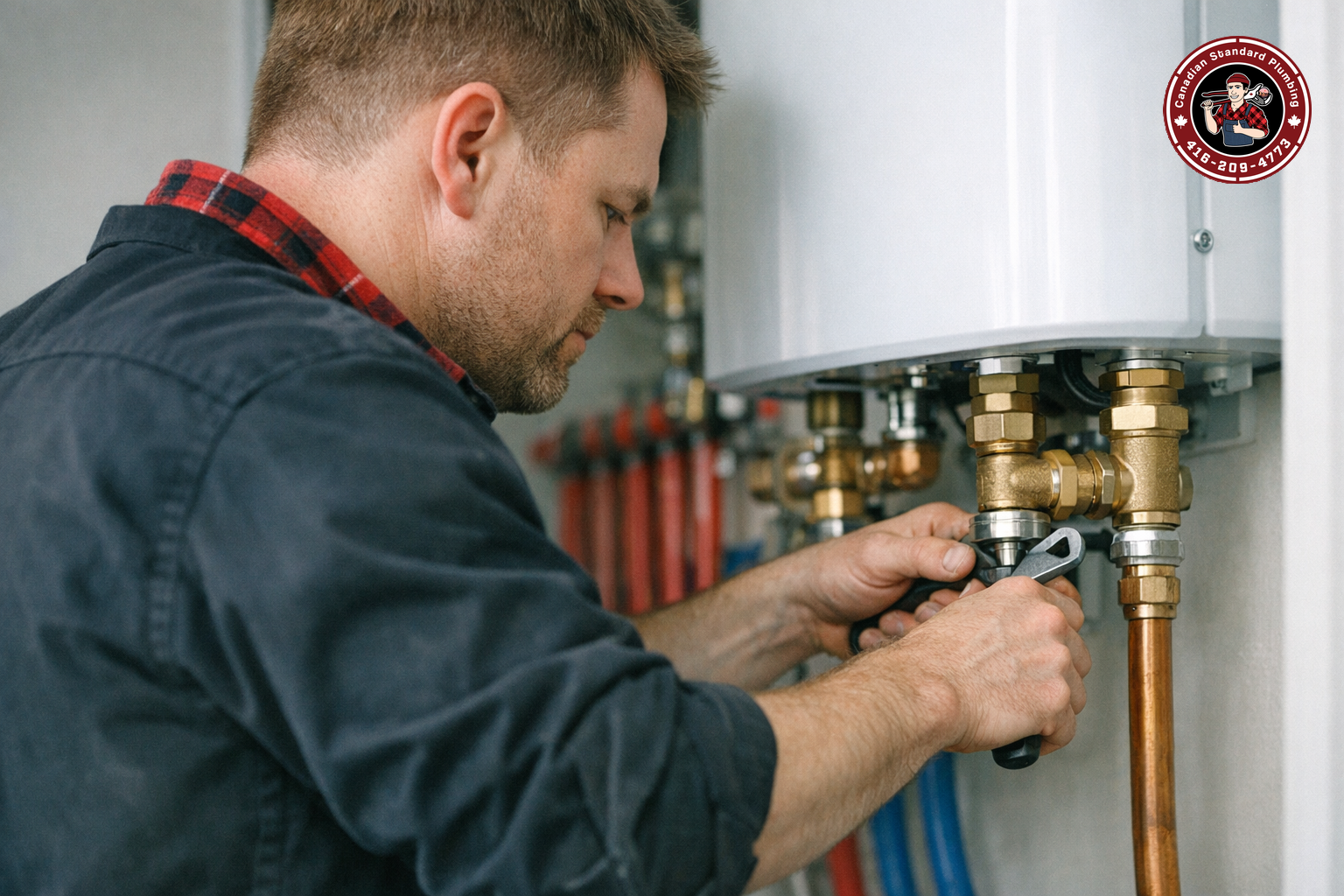

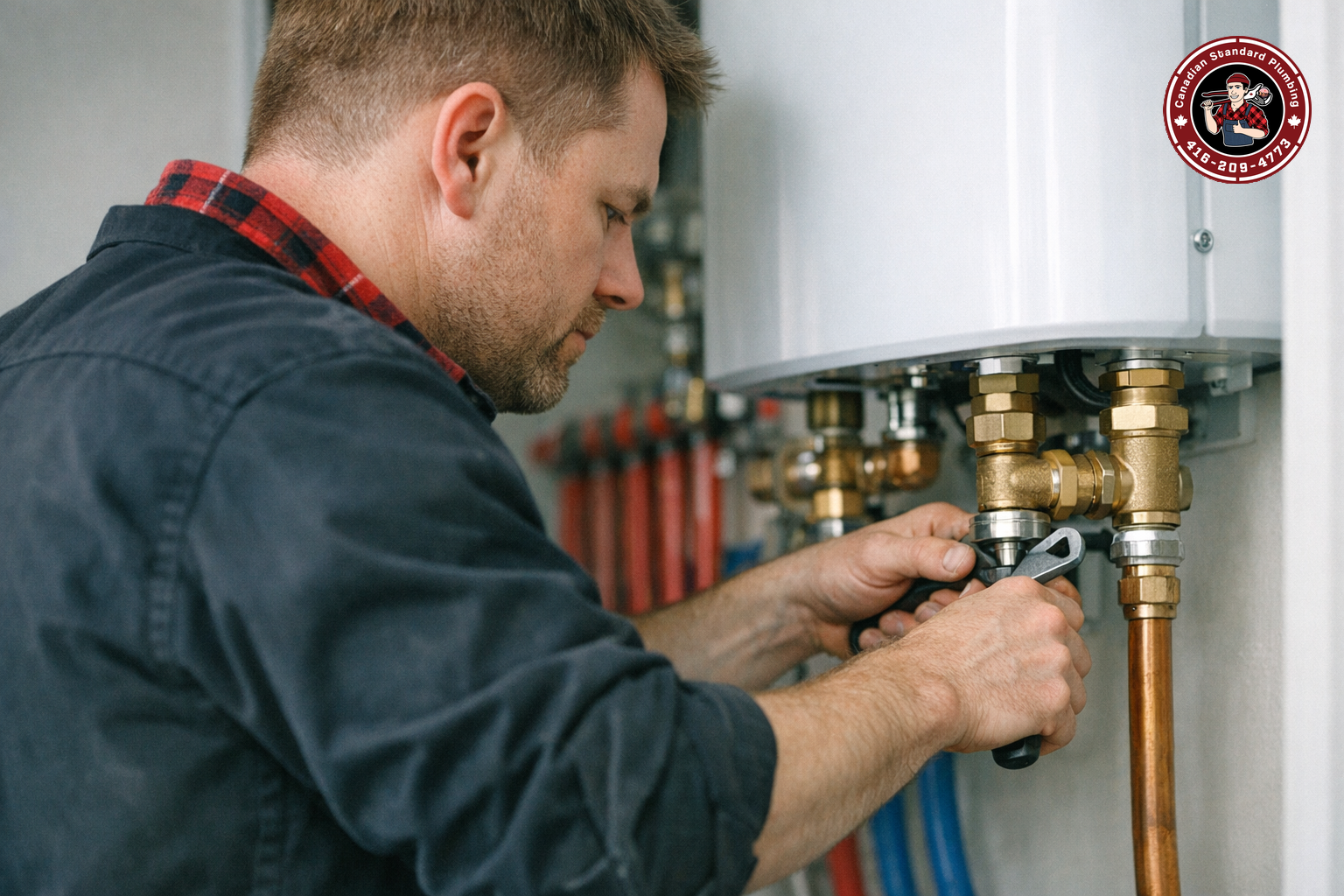
Popping sounds mean sediment is insulating heat inside the tank, forcing the burner or element to work harder than it should. At eight years, a tank unit is getting close to the end of its usual service life. Flushing the tank can buy you time, but if the heater is already showing its age, replacement is usually the smarter play. Whether a new tank or a tankless unit makes more sense depends on your household’s hot water demand, venting and gas supply, and how long you plan to stay in the home — we’ll walk you through the trade-offs and put a written quote in your hands before any work starts.
The Short Answer
Sediment has accumulated at the bottom of your tank over 8 years, and the heating element is now firing directly against that buildup instead of water. This makes the metal expand and contract sharply—that’s the popping. At 8 years, you’re past the midpoint of a tank unit’s lifespan (typically 10–12 years), so the real question is: do we extend its life with a flush, or replace it now while it’s still working?
If the heater is otherwise reliable and you want to stretch your budget, a tank flush can silence the noise for another year or two. But if you’ve noticed other signs—rust stains, slow recovery, or pilot light issues—replacement is the safer bet. A water heater repair Vaughan scenario then becomes a replacement scenario, and the decision comes down to a conventional tank versus a tankless unit: tanks cost less to install and are simpler to swap, while tankless units take up less space, remove the sediment problem entirely and typically use less gas over their life. Venting, gas line capacity and available space all affect what’s practical in your home, and we’ll give you a written quote for either option before we start.
The Full Answer
Why Sediment Causes Popping—and Why It Matters
Water naturally carries minerals—calcium, magnesium, and other dissolved salts. In a tank heater, those minerals settle and harden on the tank floor over years of heating cycles. After 8 years in the Greater Toronto Area, which has moderately hard water, you’re looking at a 1–2 inch sediment layer at the bottom.
When the heating element fires, it heats the sediment-water mixture unevenly. The water trapped under the sediment turns to steam suddenly—that’s the popping and crackling you hear. It’s the tank’s way of saying the heating element is working much harder than it should be. Honestly, I didn’t believe the noise was this telling until I pulled thermometer readings from a 7-year-old tank in Thornhill—the surface temperature under sediment was 30°C hotter than normal operation, meaning the element was straining.
This accelerated wear shortens the tank’s remaining life. If you don’t flush it, you’re probably looking at failure within 2–3 years instead of 4–5.
Sediment insulates the water from the heating element, forcing it to work much hotter and harder. The popping is steam pockets forming under the sediment layer. This accelerates corrosion and heating-element failure.
The Flush Option: When It Works and When It Doesn’t
A professional tank flush involves draining the tank completely and running fresh water through it to dislodge sediment. In Vaughan and Richmond Hill we tend to see moderately hard water, so most flushes are a straightforward single-visit job — though heavy mineral buildup or tight access around the tank can add time. We’ll confirm the scope and give you a written quote before we begin.
A flush works best if your tank is between 4 and 7 years old and you’ve never flushed it before. You’ll notice quieter operation immediately, and recovery time (refilling the tank with hot water after a shower) often improves by 20–30%. But here’s the catch: at 8 years, a flush is more of a temporary patch than a fix. You’re probably looking at 1–2 years of quiet operation, then the sediment returns as the heating element continues to corrode the tank bottom.
If you’re already seeing rust-colored water coming out of the hot tap (a sign of internal rust), a flush won’t help. The tank is failing from the inside out. A property manager in Vaughan called us last year with exactly this scenario—three rental units with 9-year-old tanks. We flushed the first one; the noise came back six months later. On units two and three, we replaced them with a single Navien tankless unit serving all three suites. Their gas bill dropped 28% monthly, and they haven’t had a tenant hot-water complaint since.
Tank Replacement: The Math at 8 Years
If you’re a Vaughan homeowner with an 8-year-old tank showing signs of age—popping, slow recovery, or any rust—replacement is the decision that saves money in the long run. Here’s why: at 8 years, the tank has maybe 2–4 years left before it needs replacement anyway. A flush buys you 1–2 years at best. You’ll pay for the flush now, then face a replacement in 2–3 years anyway.
A new conventional tank, fully installed with code-compliant venting and connections, is the lower upfront cost and the simplest swap when you’re replacing like for like. A high-efficiency tankless system heats on demand and is sized to the number of fixtures it has to serve at once, so it usually costs more upfront and may require changes to venting or the gas supply. The trade-off is ongoing: tankless units generally use less gas, free up floor space, and eliminate the sediment problem entirely because there’s no storage tank. We’ll size the options for your home and provide a written quote for each before you decide.
| Option | Upfront Cost | Lifespan | Gas Savings |
|---|---|---|---|
| Tank Flush (Existing Unit) | Written quote after we assess access and buildup | 1–2 years | None |
| New Tank (Bradford White/Rheem) | Quoted in writing after we see the site | 10–12 years | Minimal (same gas use) |
| Tankless (Navien/Rinnai) | Quoted in writing after we see the site | 15–20 years | 20–28% monthly |
For most Vaughan homeowners, a new tank (not tankless) makes sense at 8 years if you want to keep the same comfort level and recovery time. Tankless is the right choice if you’re willing to adjust to on-demand heating (smaller simultaneous flows) and want the best long-term economics.
Other Signs Your Tank Is Near End-of-Life
Popping is one warning signal, but it rarely appears alone. Check for these other signs:
Rust or discolored hot water
Orange, brown, or cloudy water from your hot tap means rust is forming inside the tank. This is irreversible and signals failure within months.
Slow hot water recovery
The tank takes much longer to refill with hot water after a shower. Sediment lowers heating efficiency, but if it doesn’t improve after a flush, the element is aging.
Water pooling or seeping around the base
Corrosion has created micro-leaks in the tank. This demands immediate replacement—a catastrophic leak can happen without warning.
Pilot light or ignition issues
Corrosion inside the combustion chamber or sediment clogging the burner air intake creates ignition failures. A new unit is safer than repeated repair calls.
Prevent Future Sediment: Anode Rod and Flush Cycles
If you choose to replace the tank, protecting the new one from sediment is simple. Every tank comes with an anode rod—a sacrificial metal rod that corrodes in place of the tank itself. That rod wears out long before the tank does, and how quickly depends on your water conditions and how much hot water the household or building uses, so it’s worth having it checked periodically and swapped once it’s spent. It’s a small, planned job next to replacing a tank, and staying on top of the anode partway through the life of your current tank may well have delayed or avoided the popping you’re hearing now. Ask us to look at it and we’ll put a written quote in front of you before any work starts.
For mineral-heavy areas (some Markham and Concord neighbourhoods), we recommend flushing on a regular preventive schedule rather than waiting for symptoms to show up. A scheduled flush is a small, planned visit compared with an emergency replacement—or with repairing the water damage if the tank lets go unexpectedly. Tell us about your water and how the tank is behaving, and we’ll suggest an interval and give you a written quote before anything starts.
The 8-Year Decision: Repair or Replace?
Here’s the practical choice for your Vaughan home: if the tank is showing popping AND one or more of the other warning signs above (rust water, slow recovery, seeping), replace it. If it’s only the popping and everything else works fine, a flush is reasonable—but budget for replacement within 2 years.
A Richmond Hill homeowner called us at 11 PM with water pooling under their kitchen sink. We diagnosed a failed braided supply-line connector, replaced it with a stainless braided line, and installed an emergency shutoff that same night. The same principle applies here: deal with the popping now, on your schedule, rather than risk a weekend emergency when the tank finally gives out and you’re without hot water—and potentially cleaning up water damage as well. We’ll quote the work in writing before we start.
When the Answer Is Different
Light-Commercial Scenarios (Multi-Unit Buildings, Condos)
If you’re a property manager or condo board member with multiple units, the equation changes entirely. A single failing tenant hot-water complaint can trigger calls to your maintenance team and complaints to the board. Replacing an aging tank immediately, or upgrading to a single tankless unit serving the building, eliminates that friction and often cuts gas costs for the entire building.
We recently converted a three-unit Vaughan rental property from three aging 40-gallon tanks to a single Navien tankless unit serving the building. Per the property manager’s own reports, their monthly gas bill fell 28%—and the tenant calls about having no hot water stopped. What a conversion like that costs depends on the building, the gas and venting situation and the fixture load, so we scope it on site and put the number in writing before we begin.
Newly Renovated Bathrooms
If you’re mid-renovation or planning one, this is the ideal moment to upgrade to tankless or a larger, more efficient tank. The rough-in work (venting, gas, drain connections) is already exposed, so installation is faster and cheaper than retrofitting a working unit later. A King City client renovating a primary bathroom had us install a Navien unit at the same time—slightly higher upfront cost, but no hot-water bottleneck during showers with the kids.
Frequently Asked Questions
Can I flush the tank myself, or should I hire a professional?
DIY flushing often goes sideways because homeowners don’t have the right equipment and don’t always isolate the valve correctly—we get called out to half-finished DIY shutoff-valve swaps where the homeowner couldn’t stop the flow. Having a professional plumber do it is worth it for the speed, the safety and the confidence that the sediment actually came out. We can also inspect the tank for corrosion while we’re in there, and we’ll give you a written quote before we start.
If I replace with a tankless unit, will I notice a difference in water pressure?
Yes, but not negatively. A tankless unit heats water on demand rather than storing it, so you get instant hot water at the tap—no wait time. However, simultaneous flows (running the shower and the kitchen sink hot at the same time) will be lower than a 50-gallon tank. For most households in Vaughan and Thornhill, a single Navien or Rinnai unit covers 1–2 bathrooms perfectly. If you have 3+ bathrooms and heavy simultaneous usage, you might pair it with a small buffer tank or install a second unit.
How often should I have the tank flushed if I keep the current unit?
Every 2–3 years is ideal in the GTA’s moderately hard water. If you’re in a softer-water area (closer to Etobicoke), you might stretch to 4 years. Regular flushing adds years to a tank and prevents the sediment-driven failures we see. Many homeowners ask us to schedule it on an annual maintenance visit—it’s a cheap insurance policy against emergency replacement.
What if the popping stops after one year? Should I wait longer before replacing?
We wouldn’t. Popping that returns tells you sediment is re-accumulating and corrosion is advancing. Once a tank of that age is showing repeated sediment buildup, it’s usually well into the back end of its service life. Waiting for the next failure means risking a leak that damages your home or your tenants’ units. A planned replacement on your schedule is almost always the cheaper path than water-damage remediation or an emergency swap on a weekend—and we’ll put the cost in writing before any work begins.
Have a Similar Question?
Whether you’re dealing with water heater noise, slow hot water recovery, or planning a bathroom renovation, we’re here to help. We serve Vaughan, Thornhill, Maple, Concord, Richmond Hill, Markham, Aurora, King City, North York, Toronto, and Etobicoke with same-day and 24/7 emergency water heater service. Our team will assess your tank, run a flushing or replacement estimate, and make sure you’re equipped to make the right decision.
Canadian Standard Plumbing
Daniel and our team serve the Greater Toronto Area and York Region with water heater repair and replacement, leak detection, drain cleaning and fixture and pipe work for homes and businesses. Available 24/7.
🎧 Listen to article
- A Customer Asked: “Why Is My Water Heater Making a Popping Noise at Night?” — Our Honest Answer
- A Customer Asked: “My Hot Water Runs Out After 8 Minutes — Is My Bradford White Tank Dying or Just Sediment-Lo
- Rinnai vs Navien Tankless Water Heaters: Which One Handles a Toronto Hard-Water Supply Without Early Scale Bui
- How We Found a Slab Leak Under a Vaughan Bungalow That 2 Other Plumbers Missed — Camera Inspection Saved the D