
A Customer Asked: “Why Is My Water Heater Making a Popping Noise at Night?” — A Master Plumber’s Honest Answer

Last updated: June 26, 2026
The short answer: that popping is almost certainly sediment buildup on the tank bottom thermal-shocking when the burner ignites. It’s not dangerous in the immediate sense, but it signals your tank is aging and efficiency is dropping. We recommend a professional flush or inspection within the month—if it’s a 10+ year old tank, you’re likely looking at replacement within 6–24 months anyway.
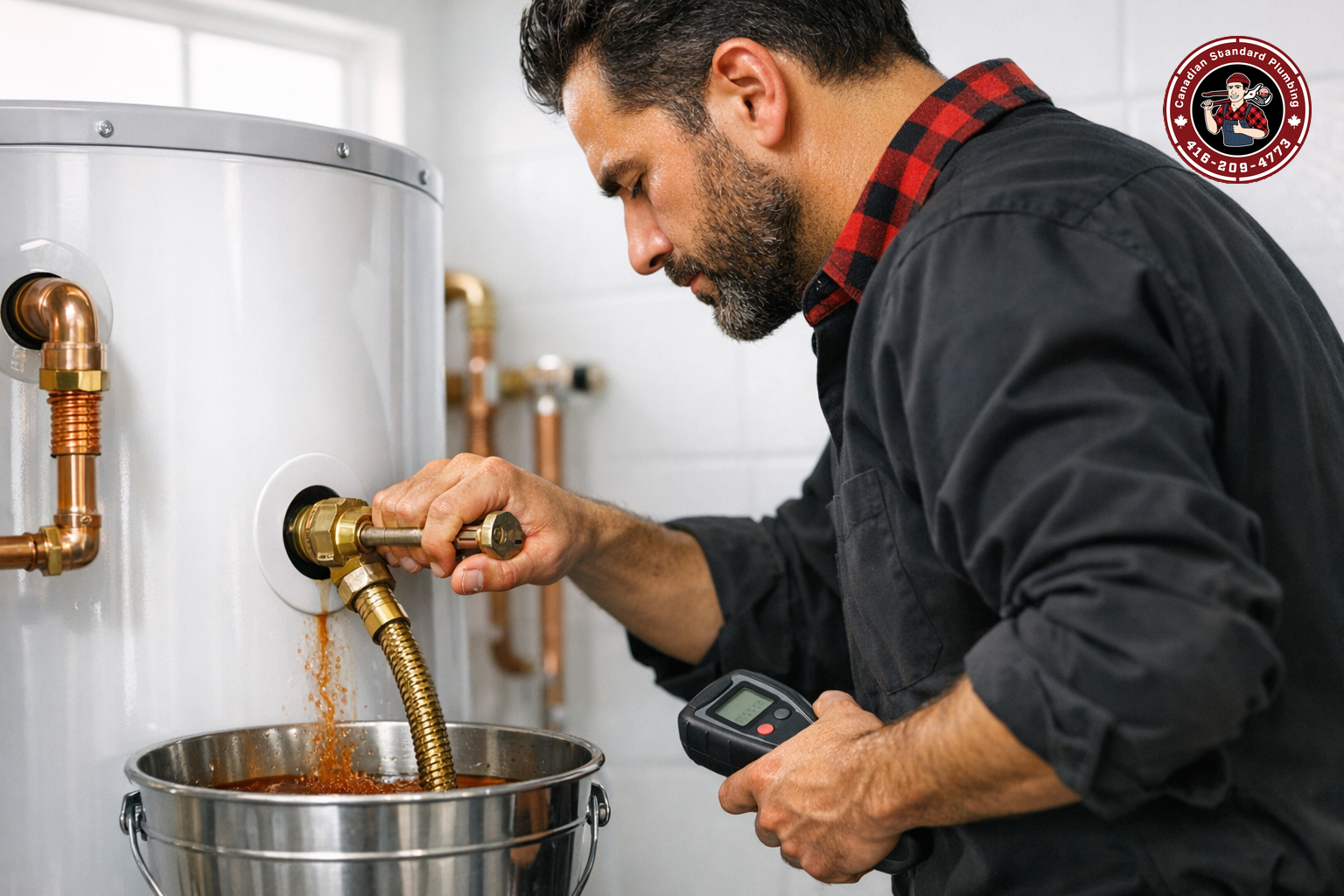
Table of Contents
- The Short Answer
- The Full Answer: Why Popping Happens
- Related Question We Often Hear
- When the Answer Is Different
- FAQ: Water Heater Popping & Noises
- Get Help Now
- Popping is thermal shock: sediment on the tank bottom traps water that flashes to steam when the burner fires.
- It’s not immediately dangerous, but it signals accelerated aging—a flush can extend the tank’s usable life, while replacement is often the better long-term value on an older unit.
- Cost depends on the work involved: a flush is a service call, while replacement adds the new unit, removal of the old tank and the gas and water connections. We’ll give you a written quote before we start either one.
- If you hear popping and the tank is well past its expected service life, have a professional plumber inspect it before you’re dealing with an emergency call.
The Short Answer: Why Your Water Heater Making Popping Noise at Night Matters
Popping at night is your heater’s way of telling you sediment has accumulated on the tank floor. When the thermostat drops after evening use and the burner kicks in to re-heat the water, that sediment-trapped water flashes to steam in pockets—those pockets rupture, and you hear the crack. This is thermal shock.
Here’s what matters: popping is an aging signal. We get these calls most often from tanks that are 8–15 years into their lifespan. The sediment buildup doesn’t happen overnight—it’s been happening slowly. The reason you hear it at night is because that’s when usage drops and the thermostat has time to fall, so the next burner cycle is more intense.
If your tank is relatively new and has never been flushed, a professional flush usually solves the noise and buys you a good stretch of quiet operation. If the tank is already a decade old, that same flush may only buy a short reprieve before replacement becomes necessary anyway—and at that point, putting the money toward a new tank (Bradford White, Rheem, or a Navien if you’re considering tankless) is usually the smarter financial move. We’ll walk you through both options and quote them in writing before anything happens.
The Full Answer: Why Popping Happens and What’s Really Going On
1. Sediment Buildup Is Universal—But GTA Hard Water Speeds It Up
Every water heater in the Greater Toronto Area, from Vaughan to Markham to North York, accumulates sediment. That sediment is minerals—calcium and magnesium—that precipitate out of the water column and settle on the tank floor. Over 5–10 years, that layer can be 1–3 inches thick.
Honestly, I didn’t believe how fast it accumulated in the GTA until I opened a Thornhill customer’s tank during a service call—the sediment was dark brown, almost coal-like, and when I scraped it, it came off in chunks. The mineral content in York Region water is higher than in some neighborhoods farther west, which means tanks in Richmond Hill and Markham age slightly faster if they’re never flushed.
The popping happens because sediment is an insulator. Water trapped in the sediment layer doesn’t circulate—it stays trapped and heats past the normal boiling point (in a pressurized tank, that’s possible). When the pressure drops even slightly, that superheated water flashes to steam, the pocket ruptures, and you hear the crack.
2. Why It Happens at Night (and What That Tells You)
You notice it at night because that’s when the tank cools. During the day, showers, laundry, and other hot water draws keep the tank relatively warm and the burner cycling regularly. By 10 PM, if no one’s used hot water for a few hours, the tank temperature drops 10–20 degrees.
The thermostat senses that drop and fires the burner. That sudden heat, applied to a tank bottom caked with sediment, creates the thermal shock. The cold sediment heats rapidly, water in the sediment layer flashes, the pocket ruptures—pop.
The fact that you hear it consistently suggests the sediment layer is significant—maybe 1.5+ inches. If it were just a light dusting, the popping would be occasional and quieter. Consistent nightly popping = consistent thermal shock = medium-to-heavy buildup.
Popping at night signals sediment on the tank floor thermal-shocking during the evening burner cycle. Consistent nightly noise means significant buildup. A professional flush can reset the clock by 3–5 years; if the tank is already 10+ years old, replacement is often the better investment.
3. Efficiency Loss You’re Already Paying For
Here’s what homeowners in Etobicoke, North York, and Concord don’t realize: that sediment layer is insulating the heating element (or burner flame) from the bulk water in the tank. Your burner has to work harder and longer to reach the target temperature because the heat isn’t transferring efficiently.
That means your gas bill (or electric bill, if it’s an electric tank) is higher than it should be. A Vaughan property manager we worked with had three rental units with 40-gallon gas tanks that were running continuously—tenant complaints about slow hot water recovery, high gas bills, the works. We converted all three to a single Navien tankless system serving the building. After the retrofit, she reported a 28% drop in monthly gas costs. That delta was partly the efficiency of tankless tech, but also partly the fact that those old tanks were caked with sediment.
Clearing sediment lets the burner heat water directly instead of heating through an insulating layer of scale, so a flush can recover some of the efficiency the tank has lost. How much you actually see on your gas bill depends on how much sediment had built up, how hard your water is and how much hot water your household or business uses.
4. Is It Safe? (Short Answer: Yes, But Watch for Red Flags)
Popping alone doesn’t mean the tank is about to rupture or explode. Water heater tanks are rated for 100+ PSI; a little thermal shock creating local steam pockets won’t breach that. The relief valve at the top of the tank is designed to vent pressure if it builds dangerously—that’s a separate mechanism from the popping you’re hearing.
That said, watch for these red flags in addition to popping: water pooling under or around the tank base, a hissing sound from the relief valve (that’s pressure-relief activity, and it’s urgent), rust staining on the tank exterior, or a sudden drop in hot water temperature. Any of those warrant an emergency inspection call. Popping alone? You have time to schedule a professional visit within a month.
5. Cost: Flush Now vs. Replace Soon
This is the decision tree most Toronto-area homeowners face when they call us about popping.
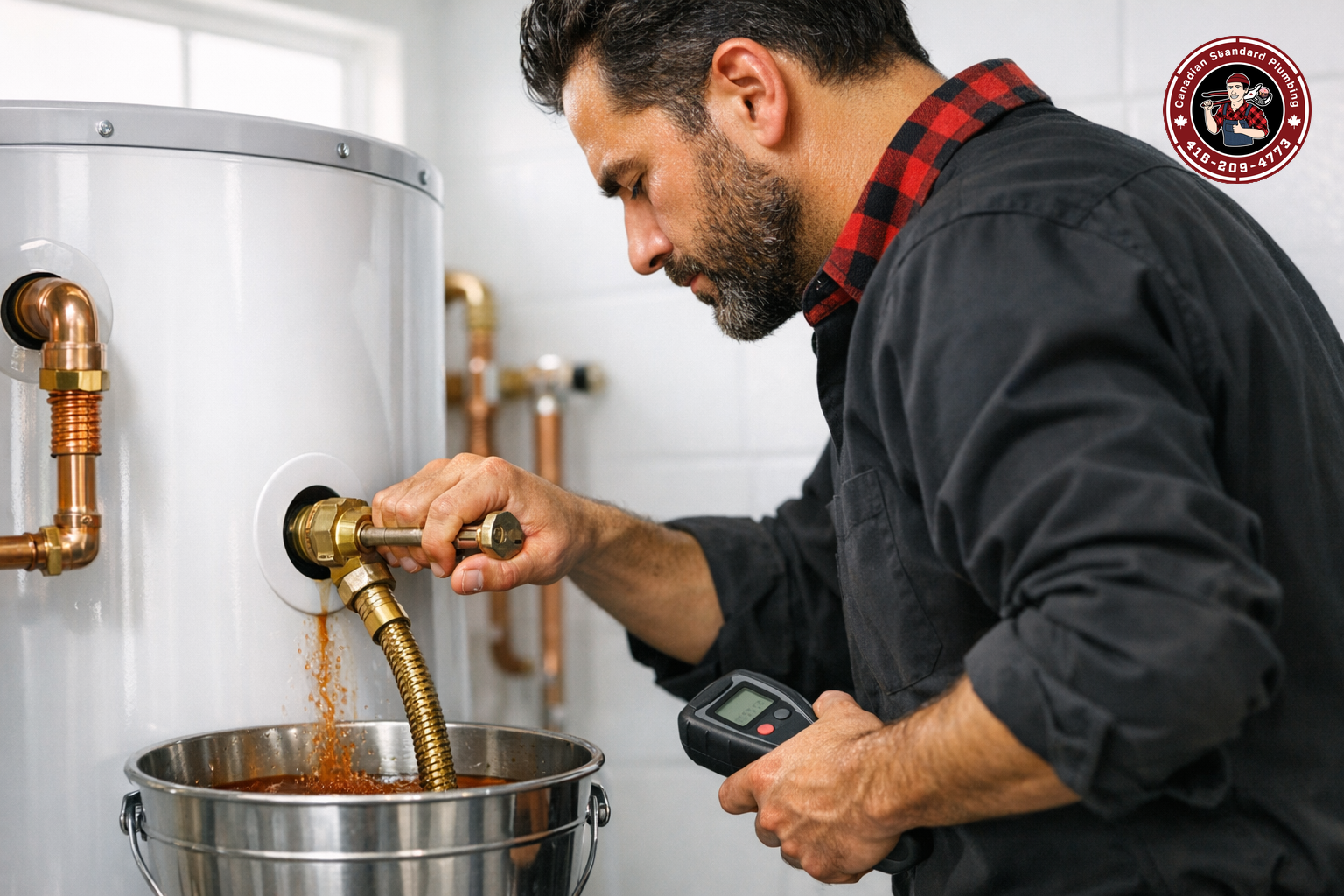
Mid-life tank, popping just started: Flush it. It’s a straightforward service visit—we’ll drain the tank, circulate a descaling solution, rinse and refill—and you’ll usually get several more quiet years before sediment builds back up. We’ll confirm the cost in writing before we begin.
Older tank, popping is new: Flush it or replace it. If the tank is still holding pressure and there are no leaks, a flush buys time. But once a tank is into the last stretch of its useful life, replacement is the less frustrating path if you want to avoid emergency downtime and repeat service calls. A tank replacement includes removal of the old unit, the gas and water line hookups, and whatever parts warranty the manufacturer offers on the model you choose. We’ll price out the flush and the replacement side by side in a written quote so you can make the call.
Tank age 12+ years, popping, maybe rust staining: Replace it. A flush is money thrown at a dying asset. Replacement protects you from emergency Saturday-at-11 PM calls and gives you predictable utility costs for the next decade.
Tankless consideration: If you’re in a 3+ person household and you’re sick of the tank model, a Rinnai or Navien tankless is worth pricing out. No sediment sitting in a tank, hot water that doesn’t run out mid-shower, and a longer service life than a typical tank. It’s a bigger upfront spend, and whether it pays back depends on your household’s hot water demand, your gas rates, and what venting, gas line and condensate work your home actually needs. For families in Vaughan, Markham and North York with heavy hot water use we’ll walk you through the trade-offs and put a written quote in your hands before any work starts.
6. Prevention After the Fix
Once you’ve flushed or replaced the tank, you have two options to slow sediment buildup:
1. Flush annually. If you’re keeping the tank and want to squeeze maximum life out of it, an annual flush in the fall keeps sediment light. Over several years, though, those flushes add up — and at some point the running cost of maintaining an aging tank starts to close in on the cost of simply replacing it. It’s close enough that it comes down to your patience for maintenance. We’re happy to quote both paths in writing so you can compare them side by side.
2. Install a whole-home water softener. If you’re in Aurora, King City, or other areas with harder water, a softener removes the minerals before they reach the tank. There’s an upfront cost for the unit and installation, plus an ongoing cost for salt, so it’s worth looking at over a long horizon — because it protects not just the water heater, it protects your washing machine, dishwasher, and fixtures too. We recommend it to clients who are dealing with their second tank replacement or who plan to stay in the home long term, and we’ll give you a written quote before anything is ordered.
Related Question We Often Hear
No—whistling is usually a failing dip tube (the pipe inside the tank that directs incoming cold water down to the bottom). As cold water enters, it mixes with hot, and turbulence around a cracked dip tube creates the whistle. Replacing a dip tube is a far smaller job than replacing a tank, and it can buy you additional service life on a tank that’s otherwise sound. We tend to see it on tanks well into their service life. If you hear both popping AND whistling, the tank is aging on multiple fronts—time to book an inspection and plan your replacement timeline. We’ll quote whatever we recommend in writing first.
When the Answer Is Different: Edge Cases
Light-Commercial or Multi-Unit Rental Properties
If you’re a property manager in Etobicoke or Richmond Hill managing 3+ units or a small commercial building with multiple units, a single tank popping is a tenant-complaint magnet. The same popping issue becomes an emergency if it affects tenant satisfaction or building code compliance.
We often recommend multi-unit properties upgrade to tankless or a high-capacity commercial system for reliability and tenant retention. A property manager in Vaughan we worked with had three units on individual 40-gallon tanks—each one was aging, each one was a potential failure point. We installed one Navien tankless system with a dedicated recirc pump, serving all three units from a single point. Upfront cost was higher, but no more tenant hot water calls, 28% lower monthly gas bills (per the manager’s report), and zero equipment in three separate units to maintain. For multi-unit buildings, popping on one tank is a signal to rethink the whole system.
New or Recently Replaced Tanks Making Popping Sounds
If you had a water heater installed in the last 6 months and it’s already popping, that’s a different problem. New tanks don’t have sediment buildup. Popping in a new or nearly-new tank suggests either: (1) the installer used old/reconditioned components, (2) there’s debris in the supply line from the install, or (3) the tank is defective. Call the installer back—this is warranty work, not a maintenance flush you should be paying for. If you installed it yourself or the installer is non-responsive, call us for a diagnostic visit that doubles as a health-check. We’ll confirm what’s actually happening and give you a written quote before we do any work.
Tankless Water Heaters Making Popping or Kettling Noises
Tankless units (Rinnai, Navien, Rheem) can also experience sediment buildup in their heat exchangers. Instead of popping, you’ll hear a kettling sound—rapid, high-pitched clicking—and you might see a drop in water temperature or pressure. This is mineral scale inside the heat exchanger, and clearing it requires a professional flush with a descaling solution. If you ignore it, the blockage worsens and the unit eventually errors out or shuts down. One thing we’d flag from experience: bargain units bought online and self-installed often become a parts-availability problem, and when a component fails, sourcing it can be harder and dearer than the unit was ever worth. We’d rather see you on a brand with established parts and service support in this market. Either way, we’ll walk you through the options and put a written quote in your hands before any descaling or replacement work begins.
FAQ: Water Heater Popping & Noises
Is water heater popping a fire hazard?
Popping is not a fire hazard. It’s acoustic—the sound of steam rupturing in the sediment layer. Fire risk from a water heater comes from gas leaks, improper venting, or blocked flue paths. If you smell gas or notice the flame color is off (should be blue, not yellow or orange), that’s a call-911 emergency. Popping alone is an aging signal, not a fire signal.
Can I flush my own water heater to stop the popping?
You can drain a tank yourself (turn off the gas or power, close the cold water inlet, open the drain valve at the base, and let it empty into a sump or floor drain). But a true flush requires circulating a descaling solution through the tank and supply lines—that’s not a DIY task without specialized equipment. If you drain the tank and refill without descaling, you’ve removed the water and lost hot water for a few hours, but you haven’t dissolved the sediment. Save yourself the hassle and call a professional plumber; they have the pump and hoses to actually clean it, and we’ll quote the work in writing before we start.
How old is my water heater? Where do I find the serial number?
Look at the manufacturer’s label on the side of the tank (usually a white or metallic sticker). The serial number encodes the manufacture date. For most brands (Bradford White, Rheem, AO Smith, Navien), the first letter is the manufacturing month (A=January, B=February, etc.) and the first two digits of the year. A serial starting with “F24” means February 2024—your tank is 2 years old. If you can’t read the label or it’s faded, we can confirm age during a service visit.
What’s the difference between a Rinnai and Navien tankless, and which should I pick?
Both are well-established manufacturers with good reliability and parts availability in the GTA. Rinnai offers a wide product range and a long brand history; Navien is a common choice in commercial applications. For most Toronto-area homes they’re comparable—pick based on the installer’s recommendation, the venting and gas supply your building can support, and the warranty terms on the specific model you’re considering (ask for those in writing from the supplier, since they vary by model and by whether the unit is registered). We install both. Don’t let a small difference in the quoted figure be the deciding factor; how the unit is sized, vented and commissioned will matter far more over its life. We’ll give you a written quote covering the unit and the install before any work starts.
Need a Water Heater Inspection or Flush?
If your water heater is popping at night, a professional inspection tells you whether it’s flush-and-reset or time to replace. We serve Toronto, Vaughan, Thornhill, Markham, Richmond Hill, North York, Etobicoke, and all of York Region with same-day or next-day availability—plus 24/7 emergency response if a leak or failure happens after hours.
Our team will diagnose the issue, explain your options (flush, repair, or replacement), and give you a written quote before any work begins—no surprises. We’re owner-operated, and homeowners, restaurants, clinics and property managers across the Greater Toronto Area call us back because we get it right the first time.
Canadian Standard Plumbing
Owner-operated, serving homes and businesses across the GTA. Available 24/7 for emergencies, with a written quote before we start.
Permalink